News
Nigeria Rejects US Deportation Demands, Citing Domestic Challenges

Nigeria's government has taken a resolute stand against the United States' attempts to impose its migration policies, particularly concerning the repatriation of foreign nationals from third countries. This assertive position reflects a broader resistance among African nations to what they perceive as undue external pressure on their sovereign affairs. The ongoing dialogue between Abuja and Washington highlights the complexities of international relations, where national interests often diverge, leading to diplomatic friction and reevaluations of alliances.
The situation underscores a critical moment in global migration dynamics, where developed nations seek to manage their migrant populations by engaging with developing countries. However, for nations like Nigeria, the calculus involves balancing international obligations with pressing domestic realities. The implications of this diplomatic standoff extend beyond just migration, touching upon trade, economic partnerships, and the fundamental principles of national autonomy in an increasingly interconnected world.
Nigeria's Firm Stance on Deportation
Nigeria's Foreign Minister, Yusuf Tuggar, has unequivocally rejected requests from the United States to accept deportees, particularly those from Venezuela and other non-Nigerian origins. Citing the nation's substantial population and existing internal challenges, Tuggar conveyed that Nigeria is not in a position to absorb additional burdens from foreign migration policies. This declaration comes amidst reports of aggressive US diplomatic efforts under the Trump administration, which allegedly include leveraging economic and visa-related pressures to coerce African countries into accepting deportees.
The Nigerian government's stance is a direct response to what it views as an imposition of foreign problems onto its already strained resources. Tuggar's remarks highlight a growing sentiment among some African leaders who advocate for national self-reliance and the prioritization of their own citizens' welfare. This rejection sends a clear message about Nigeria's commitment to protecting its sovereignty and managing its internal affairs without external interference, even when faced with potential diplomatic repercussions.
Broader Implications of US Migration Policies
The United States' strategy of pressuring African nations to accept deportees is part of a wider effort to streamline its immigration enforcement, a policy that has stirred considerable international debate. Beyond Nigeria, countries such as South Sudan have already received deportees, and others like Rwanda, Benin, Eswatini, and Libya have reportedly been approached for similar arrangements. This broad approach by the US has been met with varying degrees of resistance, with some nations explicitly denying any agreements to accept such individuals.
The recent visa restrictions imposed by the US on citizens from Nigeria, Ethiopia, and Cameroon have intensified the controversy. While the US characterizes these measures as "global reciprocity realignment," Nigerian officials contend that they are directly linked to the country's refusal to cooperate with US deportation demands. This perceived linkage between migration policies and visa restrictions raises concerns about the fairness and reciprocity in international relations, prompting African nations to re-evaluate their diplomatic and economic engagements with the US and emphasize the pursuit of their own national interests.
CNN anchor known for his coverage of major global events and sober, factual delivery.
Other Articles
 Jul 11, 2025
The Enduring Legacy of Rebekah Del Rio: A Voice That Transcended Adversity
Rebekah Del Rio, the singer renowned for her poignant Spanish rendition of Roy Orbison's 'Crying' in David Lynch’s film 'Mulholland Drive,' passed away at 57. Despite facing numerous career challenges, her distinctive vocal talent found a unique platform through her collaboration with Lynch. Her single-take recording of 'Llorando' became a memorable moment in cinema, solidifying her place in the hearts of fans.
By Ann Curry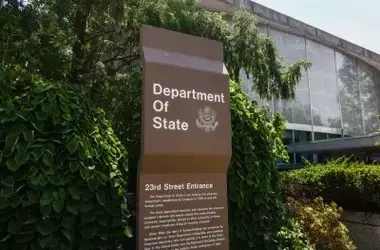 Jul 11, 2025
U.S. Department of State Undergoes Major Staff Reduction and Restructuring
The U.S. State Department is implementing its most significant reorganization in decades, cutting approximately 15% of its Washington-based personnel. Secretary of State Marco Rubio, spearheading this initiative, defends the layoffs as a necessary step to streamline operations by eliminating redundant offices and accelerating decision-making processes. This drastic reduction, however, has drawn strong condemnation from former diplomats and Democratic lawmakers, who argue it undermines America's diplomatic capabilities and institutional expertise, potentially weakening its standing on the global stage.
By Mona Chalabi Jul 13, 2025
A Martian Meteorite's Journey to Auction
A substantial Martian meteorite, weighing 54 pounds, is set to be auctioned by Sotheby's in New York, with an estimated value between $2 million and $4 million. This rare celestial artifact, known as NWA 16788, is believed to have journeyed from Mars to Earth following a colossal asteroid impact, eventually landing in the Sahara Desert. Its unique composition, confirmed by scientific analysis, makes it a significant piece for collectors and researchers alike, offering a tangible link to the Red Planet.
By Carl Bernstein