News
NFL Prohibits Smelling Salts Amidst Safety Concerns and Concussion Risks

In a significant move prioritizing athlete well-being, the National Football League has officially prohibited the use of smelling salts during its games. This decision, announced recently, underscores the league's commitment to player safety, particularly in light of emerging medical guidance and the pervasive issue of concussions within professional football. The ban reflects a growing understanding of the potential adverse effects of these substances and a proactive approach to mitigating health risks for athletes. This action by the NFL follows similar prohibitions by other prominent sports organizations globally, signaling a collective shift towards greater caution regarding athlete health.
Details of the Prohibitory Measure
On a pivotal Tuesday in August 2025, the NFL, in a widely circulated announcement, declared its new policy: the immediate cessation of smelling salt use by players on the field. This prohibition stems directly from a prior warning issued by the U.S. Food and Drug Administration (FDA), which questioned the safety and effectiveness of these inhalants. Crucially, the NFL's concern extends beyond the general safety profile, emphasizing the capacity of smelling salts to obscure crucial indicators of head trauma. This is particularly pertinent given the staggering frequency of concussions, with statistics indicating approximately one such injury per every two NFL contests.
The discourse around this ban gained public traction when San Francisco 49ers tight end George Kittle, in an interview with NFL Network, expressed his dismay over the new rule, citing his regular reliance on smelling salts throughout games. Kittle's reaction highlights the deep-seated habits among some athletes, viewing these substances as essential for performance. However, the NFL is not alone in its stance. International sports bodies, including Australia's National Rugby League and the International Boxing Federation, have previously enacted similar bans, reflecting a global consensus on the potential dangers.
Historically, smelling salts, primarily composed of ammonium carbonate, were known as 'salt of hartshorn' and were traditionally used for treating fainting spells. Today, these ammonia inhalants are still mandated for medical kits on U.S. commercial flights. The mechanism involves a sharp, pungent odor upon inhalation, which triggers a rapid physiological response, increasing respiratory rate, cerebral blood flow, and heart rate. Dr. Laura Boxley, a distinguished neuropsychologist at The Ohio State University Wexner Medical Center, vividly described the smell as "really, really bad," akin to "cat urine."
While athletes like the celebrated Tom Brady have openly admitted to using smelling salts, some for what they perceive as a competitive edge, the scientific community, including Dr. Boxley, largely refutes the notion of performance enhancement. Research suggests that any perceived benefits are psychological rather than physiological. Moreover, the risks associated with frequent and inappropriate use are significant, ranging from shortness of breath and seizures to migraines. For professional football players, the gravest concern lies in the masking of concussion symptoms. The temporary heightened arousal induced by smelling salts can hide critical signs like confusion and dizziness, potentially leading to aggravated injuries due to continued play. Dr. Boxley underscores the uncharted territory athletes enter when using these substances beyond their intended medical purpose, questioning the ultimate value of such risks in the context of a game.
Reflections on the NFL's Stance
This decision by the NFL is a profound testament to the league's evolving understanding of player welfare, particularly concerning head injuries. From a journalist's perspective, it represents a pivotal moment where medical evidence and athlete safety are taking precedence over long-held traditions and perceived performance advantages. It challenges the culture of "playing through pain" and encourages a more informed, health-conscious approach to professional sports. The ban also serves as a crucial reminder to athletes across all disciplines about the importance of understanding the substances they use and the potential long-term health ramifications. It's a progressive step towards a safer, more sustainable future for high-impact sports.
Former NPR host and founder of The Race Card Project, focusing on race and identity in America.
Other Articles
 Aug 07, 2025
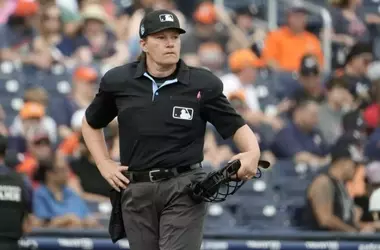
Female Officials Break Barriers in Men's Professional Sports Leagues
Jen Pawol is set to make history as the first female umpire in Major League Baseball. This milestone highlights a broader trend of women breaking into officiating roles across various men's professional sports, including the NFL, NBA, and international soccer. These pioneering women are challenging traditional norms and paving the way for greater inclusivity in sports officiating.
By Anderson Cooper Aug 07, 2025
United Airlines Faces Widespread Disruptions Amidst Major Computer System Failure
United Airlines encountered significant operational challenges on Wednesday evening as a critical computer system outage led to hundreds of flight disruptions. The carrier initiated ground stops at its primary U.S. hubs as it worked to resolve the technical issue. This incident highlights the fragility of airline operations reliant on complex IT infrastructure, causing widespread inconvenience for passengers and underscoring the critical need for robust technological resilience in the aviation sector.
By Lester Holt Aug 07, 2025
Latin Music Icon Eddie Palmieri Passes Away at 88
The legendary bandleader and pianist Eddie Palmieri, a true pioneer of Latin music, has passed away at the age of 88. His revolutionary fusion of Afro-Caribbean rhythms and jazz, showcased through his distinctive percussive piano style, left an indelible mark on the music world. A multiple Grammy winner and NEA Jazz Master, Palmieri's legacy of innovation and passion will continue to resonate with fans globally.
By Mona Chalabi