Medical Devices
Medical Device Risk Classifications Explained: A Regulatory and Technical Overview

Medical device risk classification is a formalized system used by health authorities to categorize medical instruments, apparatuses, and software based on the level of potential harm they pose to a patient or user if they fail or are misused. This classification determines the intensity of regulatory oversight, the depth of clinical evidence required, and the specific manufacturing standards a product must meet before entering the market. This article provides a neutral, evidence-based exploration of these systems, detailing the criteria for risk assessment, the specific categories utilized by major global regulators, and the objective frameworks used to ensure safety throughout a device's lifecycle. The following sections follow a structured trajectory: defining the parameters of medical risk, explaining the three-tier classification hierarchy, presenting a comparative view of international regulatory alignment, and concluding with a technical inquiry section to address common questions regarding device safety standards.

1. Basic Conceptual Analysis: Parameters of Risk Assessment
To analyze medical device classifications, one must first identify the objective factors that define "risk" in a clinical context.
Intended Use and Indications for Use
The classification of a device begins with its intended use. This refers to the general purpose of the device (e.g., to monitor heart rate), while indications for use specify the exact conditions or populations for which the device is labeled (e.g., for use in pediatric intensive care units). A device intended for a life-supporting function is inherently classified higher than one intended for general wellness.
Duration of Contact
Risk is also determined by how long the device interacts with the human body:
- Transient: Less than 60 minutes.
- Short-term: Between 60 minutes and 30 days.
- Long-term/Permanent: More than 30 days (typical for implants).
Invasiveness and Systemic Interaction
The degree to which a device enters a body orifice or is surgically implanted significantly impacts its risk profile. Non-invasive devices (like stethoscopes) pose lower risks compared to those that interface directly with the central circulatory or nervous systems.
2. Core Mechanisms: The Three-Tier Classification Hierarchy
Most global regulatory bodies, including the U.S. Food and Drug Administration (FDA) and the European Medicines Agency (EMA), utilize a risk-based hierarchy. While nomenclature varies, the underlying logic remains consistent.
Class I: Low Risk
Class I devices have a low potential for causing injury. Because the risk is minimal, they are subject to "General Controls," which include basic manufacturing standards and registration.
- Regulatory Focus: Proper labeling, establishment registration, and device listing.
- Examples: Bandages, handheld surgical instruments, and medical examination gloves.
- Data: According to the FDA, approximately 47% of medical devices fall into Class I .
Class II: Moderate Risk
Class II devices are those for which general controls are insufficient to provide reasonable assurance of safety and effectiveness. These require "Special Controls," which may include specific performance standards or post-market surveillance.
- Regulatory Focus: Demonstration of "Substantial Equivalence" to an existing device (510(k) pathway).
- Examples: Infusion pumps, powered wheelchairs, and acupuncture needles.
Class III: High Risk
Class III devices are usually those that support or sustain human life, are of substantial importance in preventing impairment of human health, or present a potential, unreasonable risk of illness or injury.
- Regulatory Focus: Rigorous scientific review via the Premarket Approval (PMA) process, often requiring human clinical trials.
- Examples: Replacement heart valves, implanted pacemakers, and automated external defibrillators (AEDs).
3. Presenting the Full Picture: Global Alignment and Objective Comparison
While the logic is shared, different regions have specific technical nuances in their classification rules.
International Regulatory Comparison
| Feature | U.S. FDA System | EU MDR System |
| Class Categories | Class I, II, III | Class I, IIa, IIb, III |
| Primary Driver | Substantial Equivalence | Clinical Evaluation |
| Software Rules | Function-based (SaMD) | Risk-based (Rule 11) |
| Review Body | Government Agency (FDA) | Notified Bodies (Private) |
Software as a Medical Device (SaMD)
With the rise of digital health, software is now classified based on the criticality of the information it provides. An algorithm that diagnoses a heart condition from an ECG is classified as high-risk, whereas an app that merely records heart rate for personal tracking is often categorized as low-risk or unregulated.
Objective Discussion on Reclassification
Classification is not static. A device can be "down-classified" if long-term data proves it is safer than initially thought, or "up-classified" if new adverse events are detected. The International Medical Device Regulators Forum (IMDRF) works to harmonize these rules to ensure that a device classified as high-risk in one nation is treated similarly in others .
4. Summary and Future Outlook: Precision and Adaptive Regulation
The landscape of medical device classification is shifting toward more adaptive models that can accommodate rapid technological changes.
Future Directions in Research:
- Artificial Intelligence (AI): Regulators are developing frameworks for AI-based devices where the "risk" may change as the algorithm learns and evolves post-market.
- Personalized Implants: 3D-printed devices tailored to an individual’s anatomy challenge traditional "batch" classification and require new verification methods.
- Real-World Evidence (RWE): Increasing reliance on data from hospital registries and insurance claims to adjust a device's risk classification throughout its lifecycle.
- Cybersecurity Metrics: As devices become more connected, "digital risk" (the potential for unauthorized access) is becoming an integral part of the safety classification process.
5. Q&A: Clarifying Common Technical Inquiries
Q: Does "Class I" mean the device is completely safe?
A: No device is without risk. "Class I" indicates that the potential for serious harm is low and that standard manufacturing controls are sufficient to manage that risk. Misuse of any medical device can still lead to injury.
Q: Why are some Class II devices cleared without clinical trials?
A: Under the 510(k) pathway, if a manufacturer can prove a device is "substantially equivalent" in safety and technology to a device already on the market (a "predicate"), the FDA may conclude that new clinical trials are unnecessary to establish its risk profile.
Q: How are "Active" versus "Passive" devices classified?
A: An active device (using an external source of power) is generally classified higher than a passive device if it delivers energy to the body (e.g., a laser vs. a scalpel), as the potential for thermal or electrical injury is greater.
Q: What is a "Notified Body"?
A: In the European Union system, a Notified Body is a private organization designated by a member state to assess the conformity of certain products before they are placed on the market. They are essential for the CE marking process of Class II and III devices.
Q: Can a device change classification based on where it is used?
A: Yes. A device intended for use by trained professionals in a hospital may be classified differently than the same device intended for use by a layperson in a home environment, due to the increased risk of user error in a non-clinical setting.
This article serves as an informational resource regarding the regulatory frameworks for medical device risk classification. For technical guidance on product development or for specific regulatory compliance inquiries, consultation with a licensed regulatory affairs professional or the official databases of the FDA (CDRH) or EMA is essential.

Clinical Pharmacologist with 15 years of experience in drug safety, regulatory affairs, and pharmacovigilance.
Exploration ArchivesOther Articles
 Dec 26, 2025
What Does FDA Clearance Mean for Devices? A Technical and Regulatory Overview
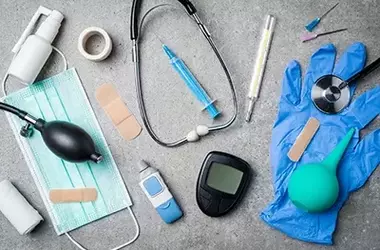
FDA clearanceis a specific regulatory determination made by the U.S. Food and Drug Administration (FDA) that allows a medical device to be legally marketed in the United States. It is primarily associated with the510(k)premarket notification process, where a manufacturer demonstrates that a new device is "substantially equivalent" to a legally marketed predicate device. This article provides a neutral, evidence-based exploration of the clearance process, detailing the distinction between clearance and approval, the mechanical and scientific criteria for substantial equivalence, the objective levels of evidence required, and the post-market obligations of manufacturers. The following sections follow a structured trajectory: defining the parameters of the 510(k) pathway, explaining the core mechanism of substantial equivalence, presenting an objective comparison of regulatory statuses, and concluding with a technical inquiry section to address common questions regarding device oversight.
 By Isabelle Fournier
 Dec 26, 2025
Difference Between Medical Devices and Medications: A Technical and Regulatory Overview
The distinction betweenmedical devicesandmedications(pharmaceuticals) is a fundamental pillar of healthcare regulation and clinical practice. While both are essential healthcare products designed to diagnose, treat, prevent, or mitigate health conditions, they are categorized based on their primary mode of action and the scientific principles by which they interact with the human body. This article provides a neutral, evidence-based exploration of these two categories, detailing their legal definitions, the biological versus mechanical pathways of their function, and the distinct regulatory frameworks used to ensure their safety. The following sections follow a structured trajectory: defining the foundational concepts of medical intervention, explaining the core mechanisms of chemical versus physical interaction, presenting an objective comparison of development and oversight, and concluding with a technical inquiry section to address common questions regarding product classification.
 By Dr. Marcus Lee
 Dec 26, 2025
How the FDA Regulates Medical Devices: A Technical and Regulatory Overview
FDA regulation of medical devicesrefers to the standardized oversight processes managed by the U.S. Food and Drug Administration's Center for Devices and Radiological Health (CDRH). This regulatory framework is designed to ensure that any instrument, apparatus, or software intended for medical use provides a reasonable assurance of safety and effectiveness. This article provides a neutral, evidence-based exploration of the legal and scientific pathways required for a device to enter and remain on the U.S. market. It examines the risk-based classification system, the specific premarket submission pathways, the mechanisms of post-market surveillance, and the objective criteria used to evaluate clinical data. The following sections follow a structured trajectory: defining the regulatory scope, explaining the hierarchy of risk-based controls, presenting a comprehensive view of the approval pathways, and concluding with a technical inquiry section to address common questions regarding federal medical oversight.
 By Dr. Luis Herrera