News
Legislative Walkouts: A Risky Tactic in American Politics

Legislative walkouts, a controversial yet recurrent tactic in American politics, are increasingly employed by minority parties to disrupt legislative processes and spotlight contentious issues. While these actions can temporarily derail opposing agendas and garner national attention, their ultimate effectiveness in blocking legislation remains debatable. The recent departure of Texas Democratic lawmakers to prevent a redistricting bill's passage exemplifies this strategy's high-stakes nature and uncertain outcomes.
The Evolving Landscape of Legislative Disruption
The recent departure of Texas Democratic legislators highlights a growing trend where minority parties employ walkouts to obstruct legislative processes. Over 50 Democratic members left Texas to prevent a quorum, effectively halting the passage of a new redistricting map. This strategy, known as \"breaking quorum,\" requires a minimum number of lawmakers to be present for legislative business to proceed. By leaving the state, the Democrats aimed to delay a bill that would favor the Republican party by potentially adding congressional seats. This maneuver, while disruptive, often only delays rather than permanently blocks legislation, as seen in historical precedents and the authority of governors to call repeated special sessions.
This political maneuver is particularly potent for minority factions, offering a means to bring legislative activity to a standstill and draw significant public and media attention to their cause. As political polarization intensifies across the United States, such tactics are becoming more frequent. Although a walkout can effectively delay legislative action and generate public discourse, its long-term success in permanently thwarting legislation is often limited. Governors retain the power to reconvene special sessions indefinitely, which can eventually compel the return of absent lawmakers. Therefore, while a walkout can serve as a temporary roadblock and a platform for advocacy, its enduring impact on policy outcomes is frequently constrained by the broader political and legal frameworks in place.
Historical Context and Consequences of Political Walkouts
Legislative walkouts have a long history in American politics, with varied results. Past instances, such as those in Texas in 2003 and 2021, and similar actions in Oregon, Indiana, and Minnesota, demonstrate the mixed success of this tactic. While some walkouts have led to concessions or drawn critical attention to issues like redistricting, abortion, and voting rights, others have ultimately failed to prevent the passage of contested legislation. These actions often come with significant professional and political repercussions for the participating lawmakers, including potential fines, loss of privileges, and even bans from re-election, as observed in Oregon's recent experience.
The consequences of such actions extend beyond immediate legislative delays, frequently exacerbating partisan tensions and fostering an environment of political animosity. While a walkout can elevate an issue to national prominence and rally external support, it rarely guarantees the complete defeat of a bill. Instead, it can lead to prolonged legislative battles, legal challenges, and heightened political polarization, turning political disagreements into deeply entrenched conflicts. Despite these risks, minority parties continue to utilize walkouts, hoping to leverage public opinion and external pressure to effect change, even if the direct legislative outcome is not always in their favor. This ongoing use underscores the perceived value of drawing national attention and building broader coalitions, even when direct legislative victories are elusive.
Data journalist and illustrator making statistics accessible for The Guardian and others.
Other Articles
 Aug 04, 2025
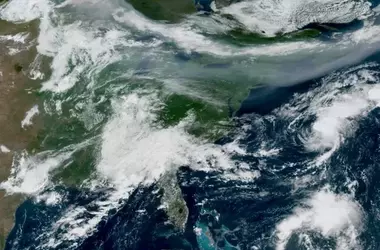
Smoke from Canadian Wildfires blankets North America, triggering widespread air quality alerts
Wildfires raging across northern Manitoba and Saskatchewan in Canada are causing extensive smoke plumes that have spread across central Canada, the Great Lakes region, and the northeastern United States. This atmospheric phenomenon has significantly deteriorated air quality and reduced visibility in numerous major urban centers. Air quality advisories were issued for these affected areas, with conditions expected to improve by midweek. However, with ongoing wildfires and shifting weather patterns, the recurrence of such smoky conditions is a strong possibility in the coming weeks.
By Ann Curry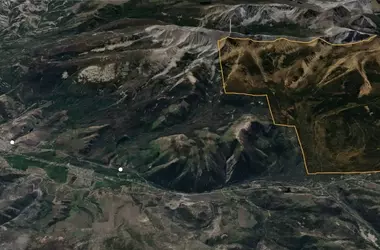 Aug 04, 2025
The Challenging Terrain of the Montana Manhunt
The ongoing search for a shooting suspect in Montana highlights the formidable obstacles posed by the region's rugged and extensive wilderness. Authorities are leveraging various resources, including ground teams, vehicles, and aerial surveillance with thermal imaging, to navigate the dense forests and mountainous landscape. This vast terrain, rich with hidden cabins and old mine shafts, provides ample opportunities for a fugitive to evade capture, extending the manhunt into its fourth day with no clear end in sight.
By Katty Kay Aug 04, 2025
Engineer Revitalizes Pay Phones for Community Connection
In rural Vermont, where cellular service is often unreliable, an electrical engineer named Patrick Schlott has taken it upon himself to restore old pay phones, transforming them into free public communication hubs. By purchasing and refurbishing these vintage devices, Schlott offers a vital link for residents and visitors, bridging the connectivity gap and fostering community well-being. This initiative, funded entirely by Schlott himself, has already seen hundreds of calls and is proving particularly beneficial for students and those in emergency situations.
By Ann Curry