Art Training
Introduction: Defining the Conceptual Framework of the Sketchbook

A sketchbook is a portable collection of blank or toned pages bound together in a book or pad format, primarily utilized by artists, designers, and students as a tool for visual documentation, experimental practice, and creative development. Historically serving as a "visual diary" or a repository for preliminary studies, the sketchbook is distinguished from finished canvases by its emphasis on process over finality.
This article provides a comprehensive technical and objective analysis of the "best sketchbook" concept. It will examine the fundamental properties of paper science, elucidate the mechanical interactions between different artistic mediums and their substrates, and present an objective overview of the current global market and manufacturing trends. By dissecting the technical specifications—such as weight ($GSM$), texture (tooth), and binding—this article aims to clarify how artists match institutional or personal requirements with specific material characteristics.
I. Basic Conceptual Analysis: Material Specifications
To understand the functional efficacy of a sketchbook, one must first analyze the physical properties of the paper it contains. In the context of the art supply industry, paper quality is not subjective but is measured against standardized metrics.
1. Paper Weight ($GSM$ and $lb$)
The density of paper is measured in Grams per Square Meter ($GSM$) or pounds ($lb$). This measurement indicates the paper's thickness and its capacity to handle various mediums without structural failure (such as warping or pilling).
- Sketching Paper (90–120 $GSM$): Lightweight and primarily intended for dry media like graphite or colored pencils.
- Drawing Paper (130–180 $GSM$): Medium weight; capable of supporting heavy erasing and light ink work.
- Watercolor/Mixed Media Paper (200–300+ $GSM$): Heavyweight paper designed to absorb water and prevent "buckling."
2. Texture and "Tooth"
"Tooth" refers to the surface grain of the paper. A "toothy" surface is rough and abrasive, which is essential for "grabbing" dry particles from charcoal or pastels. Conversely, a smooth surface is preferred for fine-line technical pens to prevent ink feathering.
II. Core Mechanisms: Media-Substrate Interaction
The performance of a sketchbook is determined by the mechanical and chemical interaction between the artist's medium and the paper’s surface.
1. Dry Media Mechanics
For dry media like graphite or charcoal, the primary mechanism is abrasion. The tooth of the paper acts as a microscopic file, stripping the medium from the pencil core and trapping it within the paper's fibers. Sketchbooks for these purposes are often optimized for erasability—the ability of the paper to release these particles without damage to the cellulose structure.
2. Wet Media Fluid Dynamics
When using watercolors or ink, the paper must manage absorption and evaporation. High-quality "wet media" sketchbooks often incorporate sizing—a chemical treatment (traditionally gelatin or starch) that regulates how quickly liquid penetrates the fibers.
- Internal Sizing: Mixed into the pulp to provide consistent absorption throughout the sheet.
- Surface Sizing: Applied to the exterior to allow the pigment to "sit" on the surface for vibrant color blending.
3. Binding and Structural Integrity
The binding mechanism affects the "lay-flat" capability of the sketchbook.
- Smyth Sewn: A traditional thread-based binding that allows the book to open flat for panoramic drawings.
- Spiral/Wire-O: Provides 360-degree rotation but can be prone to page detachment during long-term storage.
III. Presenting the Full Picture: Market Data and Trends
Global Market Scale
The global sketchbook market is a subset of the broader stationary and art supply industry. According to industry analysis, the global sketchbook market was valued at approximately USD 0.84 billion in 2024 and is projected to reach USD 1.31 billion by 2033, growing at a Compound Annual Growth Rate ($CAGR$) of 5.06% (Source: ).
Environmental and Sustainability Trends
Manufacturing in 2025 shows a significant shift toward sustainability. Industry reports indicate that over 50% of new product lines launched between 2023 and 2024 prioritized eco-friendly materials, such as 100% recycled fibers or tree-free alternatives (e.g., bamboo or stone paper), compared to only 22% in 2019.
IV. Summary and Outlook
The definition of the "best" sketchbook is inextricably linked to the technical requirements of the intended medium. While lightweight, wood-pulp sketchbooks are sufficient for preliminary drafts and education, professional applications require acid-free, heavyweight cotton papers that ensure archival longevity.
As digital art tools (tablets and styluses) continue to gain market share—estimated to be worth USD 5.8 billion in 2025 (Source: )—traditional sketchbook manufacturers are adapting by integrating hybrid features, such as paper optimized for high-resolution scanning or QR codes for digital archiving.
V. Question and Answer (Q&A)
Q1: Why is "Acid-Free" paper important?
A: Traditional paper contains lignin, which breaks down over time and produces acid. This acid causes the paper to yellow and become brittle. Acid-free paper is chemically treated to remove lignin and maintain a neutral pH, preserving the artwork for centuries.
Q2: What is the difference between "Cold-Pressed" and "Hot-Pressed" paper?
A: These terms describe the manufacturing temperature and pressure. Cold-pressed paper is passed through rollers at low temperatures, resulting in a textured surface. Hot-pressed paper is passed through heated rollers under high pressure, resulting in a smooth, flat finish.
Q3: Can a single sketchbook handle both watercolor and pencil?
A: "Mixed Media" sketchbooks are specifically engineered for this. They typically have a weight of 190–250 $GSM$ and a medium tooth, offering a compromise between the smoothness needed for pencils and the absorbency needed for light washes of paint.
Q4: Does the color of the paper matter?
A: Yes. Most sketchbooks use "Bright White" or "Natural White." Toned paper (tan, gray, or black) allows artists to work with "highlights" using white media, whereas white paper relies on the substrate itself for the lightest values.

Public health expert and educator specializing in community medicine and preventive care strategies.
Exploration ArchivesOther Articles
 Dec 22, 2025
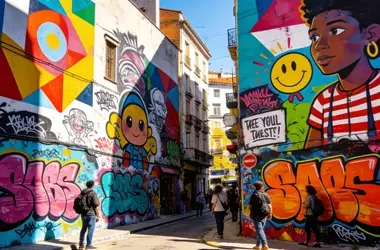
Introduction: Defining the Street Art Tour
AStreet Art Touris a specialized cultural excursion focused on the exploration and interpretation of artistic expressions found in public urban spaces. Unlike traditional museum visits, these tours treat the city as an "open-air gallery," where works such as murals, graffiti, stencils, and sticker art are analyzed within their social, political, and architectural contexts.
 By Dr. Kenji Tanaka
 Dec 22, 2025
Introduction: Defining Contemporary Art Exhibitions
Acontemporary art exhibitionis a structured presentation of artworks produced by living artists or within the most recent historical period, typically dating from the late 20th century to the present. Unlike permanent museum galleries, these exhibitions are often temporary, rotating, or site-specific, serving as a primary mechanism for the public dissemination of current aesthetic, social, and technological discourse. These events function as an interface between the artist, the institution (museum or gallery), the market, and the public.
 By Marcus Williams
 Dec 22, 2025
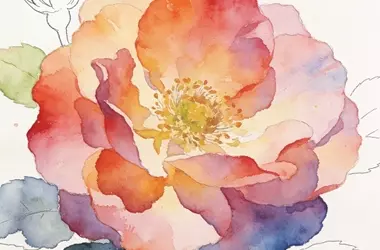
Introduction: Defining Watercolor Painting
Watercolor paintingis a graphic art technique utilizing pigments suspended in a water-based solution. The medium is chemically defined by its binder—traditionallygum arabic—which allows the pigment to adhere to a substrate while remaining resoluble in water. The defining characteristic of watercolor is itstranslucency, which permits light to pass through the pigment layer, reflect off the white surface of the paper, and return to the viewer’s eye, creating a luminous chromatic effect.
 By Antoine Dubois