News
Inflationary Pressures Escalate in June, Tariffs Impact Consumer Prices

A notable rise in consumer prices was observed last month, indicating that the recently implemented trade levies are beginning to influence the expenditures faced by shoppers. According to a report released by the Labor Department, consumer prices in June recorded a 2.7% increase compared to the same period last year, marking a more substantial annual acceleration than the preceding month. On a monthly basis, prices climbed by 0.3% between May and June, also surpassing the growth rate of the prior month.
While escalating rental costs were the primary catalyst behind June's inflationary surge, the prices of apparel, home appliances, and children's toys also saw considerable jumps, suggesting a direct consequence of the import taxes. Clothing experienced a 0.4% price hike, while appliances and toys surged by nearly 2%. Furthermore, energy and food expenses also contributed to the upward pressure on prices, although the costs of new and pre-owned vehicles, along with airfares, registered a decline. The government's revenue from these tariffs reached $27 billion in June, a fourfold increase from the corresponding month in the previous year, highlighting the profound impact of these trade policies, which have resulted in the highest average tariffs on imported goods since the Great Depression.
The persistent inflationary pressures observed last month reinforce expectations that the Federal Reserve will maintain current interest rates when its policymakers convene later in the month. This stance is likely to be adopted despite ongoing calls from the White House for a reduction in rates, as the rebound in gasoline prices and a 1% increase in electricity costs due to heightened summer demand have further complicated the economic outlook. The confluence of these factors paints a clear picture of an economy grappling with the direct and indirect consequences of global trade adjustments and domestic demand dynamics.
The current economic landscape, characterized by rising prices and the ripple effects of trade policies, underscores the intricate balance required to maintain stability and foster growth. It highlights the importance of thoughtful policy-making that considers both immediate economic impacts and long-term societal well-being. Navigating these challenges with resilience and adaptability will be crucial for fostering a robust and equitable economic future.
ITV News presenter and former BBC correspondent, known for his reporting from conflict zones.
Other Articles
 Jul 15, 2025
Resilience in the Wake of Disaster: A Texas Camp Reopens
In the aftermath of devastating floods that swept through Texas, Camp CAMP, a summer facility for children with diverse abilities, has remarkably reopened its doors. Despite the visible destruction along the Guadalupe River, the camp is providing a much-needed sense of normalcy and community for campers like Kenny Hudnall, a 21-year-old student with physical challenges. This reopening, occurring shortly after the tragic events, symbolizes a powerful message of hope and recovery for the Texas Hill Country.
By Carl Bernstein Jul 15, 2025
Thousands Volunteer in Search for Flood Victims in Central Texas
Following devastating floods in central Texas on July 4th, which tragically claimed over 130 lives, recovery efforts have been hampered by recent storms. Despite the challenges, approximately 14,000 volunteers are relentlessly searching for at least 100 individuals who remain missing. The community's resilience shines through as the large-scale search operation continues amidst difficult conditions.
By Carl Bernstein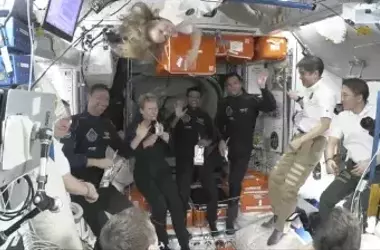 Jul 15, 2025
Axiom Space's Ax-4 Mission Concludes with Successful Pacific Splashdown
The Axiom Space Ax-4 mission has successfully concluded with four astronauts splashing down off the coast of San Diego, California. The 20-day journey, which included 18 days docked at the International Space Station, marked several historic firsts. Commander Peggy Whitson extended her record for cumulative time in space by a U.S. astronaut, and the mission saw astronauts from India, Poland, and Hungary live and work aboard the ISS for the first time in decades. The crew also performed approximately 60 scientific experiments, making it the most research-intensive Axiom Space flight to date.
By Rageh Omaar