News
EU Commission Accused of Destroying COVID Vaccine Text Messages

A controversy surrounding transparency has enveloped the European Union, specifically concerning the handling of communications related to its significant acquisition of COVID-19 vaccines from Pfizer. When the EU successfully negotiated a deal for a staggering 1.8 billion doses of Pfizer's vaccine in early 2021, the details of how this critical agreement was reached became a subject of keen public interest. It subsequently emerged that Ursula von der Leyen, the president of the European Commission, had engaged in text message exchanges with Pfizer's chief executive during the negotiation phase. This discovery prompted journalists to request access to these records, citing the EU’s established transparency regulations, a request that was initially denied by the Commission.
This refusal led to a legal challenge by The New York Times, which resulted in an EU court ruling in May that criticized the bloc for failing to provide a credible explanation for withholding the records. In response to this judicial directive, the European Commission recently offered a more elaborate account to the publication. However, this updated statement, rather than assuaging concerns, has intensified the debate among transparency advocates. The Commission’s latest narrative suggests that the text messages in question were deemed inconsequential and subsequently either erased or misplaced, with Ms. von der Leyen's chief of cabinet, Björn Seibert, reportedly reviewing them in the summer of 2021. This implies that while the messages did exist, as the Commission now explicitly confirms after previous evasiveness, they were not preserved, fueling ongoing criticism regarding the Commission's commitment to openness.
This situation underscores the vital importance of governmental transparency and accountability, particularly in times of crisis. Public institutions, regardless of their stature, have a fundamental obligation to operate with openness, ensuring that their actions can be scrutinized and understood by the populace they serve. The incident serves as a crucial reminder that trust is built on clear communication and the ready availability of information, fostering a stronger, more democratic society where power is exercised responsibly and ethically for the collective good.
Award-winning journalist and former NBC News anchor and Today show co-host.
Other Articles
 Aug 01, 2025
El Salvador Approves Indefinite Presidential Reelection, Extends Terms
El Salvador's National Assembly, dominated by President Nayib Bukele's party, has enacted significant constitutional reforms allowing for unlimited presidential reelection and extending the presidential term to six years. These changes, proposed by lawmaker Ana Figueroa, also eliminate the need for a second-round presidential election. Despite existing constitutional prohibitions, Bukele secured reelection last year following a ruling by Supreme Court justices appointed by his party. Critics argue these moves undermine democratic principles by consolidating power, while proponents assert they empower the Salvadoran people.
By Katty Kay Aug 01, 2025
Robert Wilson: A Visionary's Legacy in Theater
Robert Wilson, an influential theater director, playwright, and artist, passed away at 83. Known for his groundbreaking approach to performance, Wilson eschewed traditional narrative and dialogue, focusing instead on the interplay of light, space, and movement. His work often explored themes of time, perception, and the artificiality of naturalism, pushing the boundaries of theatrical expression and collaborating with a diverse range of artists from Philip Glass to Lady Gaga. His unique vision profoundly impacted contemporary theater.
By Lester Holt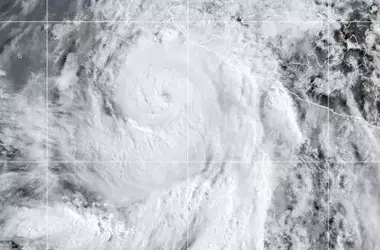 Jul 31, 2025
Defense Department Reverses Course, Ensures Continued Satellite Data for Hurricane Forecasting
The Department of Defense has rescinded its earlier decision to halt the sharing of crucial satellite weather data with hurricane forecasters and scientists. This reversal comes after strong objections from the scientific community, who emphasized the vital role this data plays in predicting and tracking severe weather events, particularly during the active hurricane season. The Navy will now maintain the data flow until at least September 2026, ensuring that critical information remains available for public safety and climate monitoring.
By Michele Norris