News
The Enduring Question: Do Protests Actually Catalyze Change?

The United States has recently been a crucible of constant public outcry and demonstration, prompting a pressing inquiry into the tangible impact of such widespread activism. From the monumental Women's March to the impassioned calls for racial justice and the more recent 'No Kings' protests, a pervasive atmosphere of dissent has settled across the nation. This persistent landscape of protest begs the fundamental question: Do these powerful displays of collective will genuinely translate into enduring societal change?
Dissecting the Dynamics of Dissent: A Historical and Contemporary Analysis of Protests
On a significant July day in 2025, a profound discussion unfolded, scrutinizing the historical trajectory and current efficacy of protest movements in the United States. This insightful examination featured Gloria J. Browne-Marshall, a distinguished scholar and author, whose groundbreaking work, \"A Protest History of the United States,\" offers a comprehensive journey through centuries of American resistance. Her meticulous research provides invaluable insights into which forms of protest have historically proven successful and the critical lessons contemporary activists can draw from their predecessors.
Complementing this historical perspective was Lex McMenamin, a prominent voice from Teen Vogue, who shared observations from the contemporary protest landscape. McMenamin's insights shed light on the evolving nature of activism in the 21st century and offered a nuanced understanding of what a \"win\" might entail for today's movements. This comprehensive dialogue aimed to demystify the complex relationship between protest and progress, exploring the nuanced pathways through which public demonstrations can (or cannot) achieve their intended aims.
The ceaseless rhythm of protests in recent American history ignites a crucial conversation about the true leverage of public demonstration. As citizens increasingly take to the streets, it becomes imperative to critically assess whether these powerful expressions of collective will are merely cathartic outlets or genuine catalysts for fundamental change. This ongoing discourse challenges us to look beyond the immediate fervor of the moment and delve into the intricate mechanisms through which societal shifts truly occur. It compels us to consider how historical precedents and evolving social dynamics influence the effectiveness of activism, ultimately shaping the future of civic engagement and social progress.
Pulitzer Prize-winning investigative journalist who helped break the Watergate scandal.
Other Articles
 Jul 22, 2025
NPR's News Leader Announces Departure Amidst Funding Cuts
Edith Chapin, NPR's chief news executive and acting content chief, has announced her decision to step down. This comes shortly after Congress voted to eliminate federal funding for public broadcasting. Chapin asserts her departure is a personal choice, not directly influenced by the recent funding decision, stating her desire for a break after two demanding executive roles. Her exit signals a significant transition for NPR as it navigates a changing landscape for public media.
By Lester Holt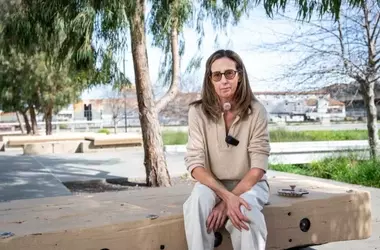 Jul 22, 2025
Voice Reclaimed: How AI Revolutionized Communication for a Cancer Survivor
After undergoing life-altering surgery for oral cancer, Sonya Sotinsky faced the loss of her ability to speak. Determined to retain her identity, she meticulously recorded her voice before the operation. This preserved audio became the foundation for an AI-generated voice, a technological marvel that allowed her to communicate with her unique intonation and personality. Her journey highlights the profound impact of voice on human identity and the transformative potential of AI in overcoming severe medical challenges.
By Isabel Allende Jul 22, 2025
USOPC Upholds Ban on Transgender Women in Women's Sports Amidst Federal Mandate
The U.S. Olympic and Paralympic Committee has reinforced its policy prohibiting transgender women from participating in women's sports. This decision aligns with a presidential executive order, prompting national sports governing bodies to revise their guidelines to ensure compliance. The move has sparked considerable debate, with proponents citing fairness in competition and opponents condemning it as discriminatory.
By Rageh Omaar