News
The Economic Impact of Tariffs: A Consumer's Perspective

For several months, the imposition of broad tariffs on goods imported into the United States has been a significant point of discussion. Initiated with the stated aim of bolstering the national economy, these import duties have seen considerable fluctuation since their initial announcement. This dynamic landscape of trade policy has prompted ongoing debate about who ultimately bears the financial burden of these measures, with many economists and observers predicting that American consumers will inevitably face elevated prices. The critical inquiry, therefore, revolves around the timeline and mechanisms through which these costs are passed on to the public.
The U.S. administration's decision to implement widespread tariffs on imports from virtually every global territory, including even uninhabited islands, marked a pivotal moment in international trade relations. This policy was presented as a strategic move to revitalize the American economy. However, the subsequent period has been characterized by considerable instability in tariff rates. Specifically, duties on goods from China have been subject to repeated increases and decreases, reflecting an unpredictable and often reactive approach to trade negotiations.
Beyond the country-specific tariffs, there have been additional duties applied to particular product categories, such as automobiles and copper. These sector-specific tariffs further complicated the global trade environment. Notably, some of these measures were temporarily suspended following significant downturns in the stock market, indicating a sensitivity to financial market reactions. Despite these adjustments and temporary pauses, the overarching trend has been the maintenance of tariff rates at or above 10 percent for nearly all goods entering the U.S.
Throughout this period, numerous voices within the economic community and media have consistently highlighted a key consequence: the transfer of tariff costs to American households. While tariffs are officially levied on importers, these businesses often pass on the increased expenses to consumers through higher retail prices. This direct impact on consumer spending power has become a central concern, raising questions about the real-world implications of these trade policies. The ongoing nature of this economic shift means that many consumers may already be experiencing the effects of these import taxes, often without directly attributing them to tariff policies.
Ultimately, the extensive application of tariffs by the U.S. government has transformed the economic landscape, creating a complex web of costs and consequences. While the stated goal was economic revitalization, the fluid nature of these policies and their consistent maintenance at high levels have invariably led to an upward pressure on the prices of imported goods. This situation compels a closer examination of how these macro-level trade decisions ripple through the economy, eventually affecting the daily expenditures and financial well-being of American consumers.
Former NPR host and founder of The Race Card Project, focusing on race and identity in America.
Other Articles
 Jul 16, 2025
A Refugee's Plight: Stateless After U.S. Deportation to Bhutan
Ray, a Nepali-speaking Bhutanese refugee, was deported by the U.S. to Bhutan, a country he had never resided in, only to be turned away and left stateless in India. This case highlights a broader issue where the U.S. is deporting individuals to nations where they face rejection and peril, bypassing established immigration safeguards. Advocates warn of the severe trauma inflicted upon communities already scarred by forced displacement, as many deportees disappear or end up in precarious situations.
By Michele Norris Jul 16, 2025
Influencers Navigate Economic Uncertainty: A Shift in the Digital Landscape
The influencer industry, a multi-billion dollar sector, is facing significant challenges due to turbulent economic conditions. As consumers tighten their belts and brands re-evaluate advertising budgets, content creators are adapting their strategies. Lavish displays of wealth are giving way to more relatable, budget-conscious content, reflecting a shift in audience expectations and a growing need for financial prudence in the digital space. This economic instability is prompting a redefinition of success for online personalities.
By Christianne Amanpour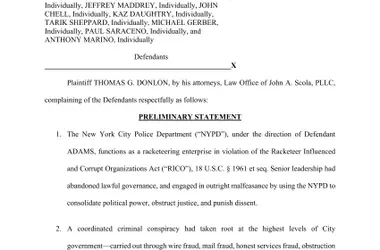 Jul 16, 2025
Former Commissioner Accuses NYC Mayor of Running Police Department as Criminal Enterprise
A former New York City police commissioner has filed a federal lawsuit against Mayor Eric Adams and top police officials, alleging widespread corruption and criminal conduct within the NYPD. This legal action, which comes amidst similar accusations from other former officials, intensifies scrutiny on the mayor's administration ahead of his re-election campaign, despite his claims of improved public safety.
By Michele Norris