Finance
Eaton Vance Tax-Advantaged Dividend Income Fund: A Buying Opportunity Amidst Market Pullback

The Eaton Vance Tax-Advantaged Dividend Income Fund (EVT), a closed-end fund, currently offers an intriguing opportunity for investors seeking exposure to a diversified equity portfolio. With a notable discount of 9.17% and a robust yield of 8.31%, the fund stands out in the current market. While its leveraged structure introduces higher volatility and risk, the existing market downturn has created a valuation gap, making it an attractive prospect compared to its historical averages. Recent adjustments in its sector allocations, including an increased focus on financials and technology, reflect a proactive management approach, exemplified by Micron Technology's ascent into a top holding following significant price gains.
EVT’s investment strategy centers on a diversified approach, aiming to provide a consistent income stream while leveraging market opportunities. The fund’s management has strategically adapted its portfolio to capitalize on evolving market dynamics. For instance, the increased weightage in the technology sector is a direct response to the strong performance of companies like Micron Technology, which has demonstrated considerable growth. This agility allows EVT to potentially enhance returns, although it also means investors should be mindful of the inherent risks associated with such strategic shifts and the use of leverage.
The current 9.17% discount to net asset value (NAV) is a critical factor distinguishing EVT as a potential buying opportunity. Historically, closed-end funds can trade at premiums or discounts depending on market sentiment and fund-specific performance. A discount of this magnitude, particularly against its long-term average, suggests that the market may be undervaluing the fund's underlying assets. For income-focused investors, the 8.31% yield, combined with this discount, could translate into an enhanced effective yield, making it an attractive option during periods of market uncertainty.
However, it is crucial for potential investors to understand the implications of EVT's leveraged structure. While leverage can amplify returns during bullish markets, it can also exacerbate losses during downturns. This heightened risk profile necessitates a thorough evaluation of an investor's risk tolerance before considering an investment. The fund’s focus on tax-advantaged dividend income is another appealing feature, potentially offering more efficient after-tax returns to eligible investors.
In summary, the Eaton Vance Tax-Advantaged Dividend Income Fund presents a noteworthy investment case, characterized by its diversified equity holdings, an appealing 8.31% yield, and a substantial 9.17% discount to NAV. The current market environment, marked by recent pullbacks, has created a favorable entry point for investors. While the fund employs leverage, leading to increased risk and volatility, its strategic sector reallocations, particularly into financials and technology, suggest a responsive management team aiming to capture growth opportunities.
Economist and professor known for predicting the 2008 crisis, writing on global macroeconomic risks.
Other Articles
 Apr 13, 2026
HDV: A Defensive ETF for Capital Preservation and Stable Income
The iShares Core High Dividend ETF (HDV) offers investors a defensive approach to the market, focusing on high-quality, dividend-paying companies. It has shown resilience during downturns and outperformed broader indices year-to-date, providing a 2.9% dividend yield. While offering stability and income, its sector concentration in consumer staples, energy, and healthcare, along with top-heavy holdings, may limit its upside potential in strong bull markets. HDV is best suited for retirees or those seeking low-volatility income, rather than aggressive growth.
By Morgan Housel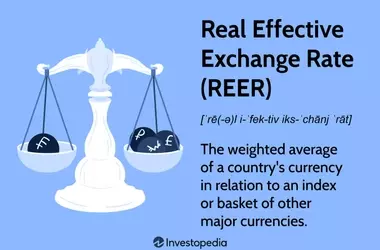 Apr 13, 2026
Understanding the Real Effective Exchange Rate (REER)
The Real Effective Exchange Rate (REER) gauges a currency's strength against a selection of major global currencies, adjusted for inflation to reveal actual purchasing power. A rising REER signals reduced trade competitiveness, making a nation's exports pricier and imports cheaper. Calculated by averaging bilateral exchange rates, weighted by trade volume, and then factoring in inflation, REER offers insights into trade dynamics. However, it doesn't capture non-trade influences like domestic price fluctuations or monetary policy shifts.
By Lisa Jing Apr 13, 2026
Maximizing Retirement Savings: A Path to Financial Security
This article explores the importance of maximizing contributions to defined contribution retirement plans, such as 401(k)s. A Vanguard study revealed that only 14% of participants fully utilize these plans. While higher earners are more likely to max out, the benefits of compounding returns and employer matching make it a crucial goal for everyone. The article outlines strategies to increase contributions and emphasizes the long-term financial advantages.
By Mariana Mazzucato