News
Democrats' Path to Revival: Bridging the Divide

Despite current challenges that might suggest otherwise, the Democratic Party stands at a critical juncture, with the potential for a significant resurgence if strategic adjustments are made. The party currently navigates an arduous period, marked by significant setbacks across federal governmental branches and plummeting public approval. Recent analyses indicate that the party's standing is at its lowest in over half a century, with a notable shift in party affiliation leaning towards Republicans for the first time in decades. Furthermore, demographic changes and the migration of voters from traditionally Democratic states present additional hurdles, leading some prominent figures to describe the Democratic brand as \"toxic.\"
Amidst these daunting statistics, a window of opportunity is emerging for Democrats. The perceived inefficiencies and adverse human impact of the current administration are becoming increasingly apparent to the public, fostering a growing disenchantment that Democrats could leverage. To effectively seize this moment, discussions with numerous Democratic leaders, strategists, and analysts reveal a consensus: merely critiquing the opposition is insufficient. The party must instead articulate a compelling new vision for the American populace. A central theme identified for this new platform is the imperative to make the American dream attainable for the middle and working classes. However, it is also widely acknowledged that economic proposals alone will not suffice if the party fails to re-engage with mainstream cultural values and adopt a more relatable communication style, avoiding any perception of condescension towards ordinary citizens.
The Democratic Party's journey toward revitalization underscores a crucial lesson in political engagement: genuine connection with the electorate extends beyond policy debates to encompass cultural understanding and empathetic communication. By prioritizing the economic well-being of all Americans and fostering a sense of shared values, the party can rebuild trust and lay the groundwork for a more inclusive and prosperous future. This strategic shift not only promises to rejuvenate the party but also to strengthen the fabric of American democracy by ensuring that the voices and needs of diverse communities are heard and addressed, paving the way for a more unified and progressive society.
Former NPR host and founder of The Race Card Project, focusing on race and identity in America.
Other Articles
 Jul 18, 2025
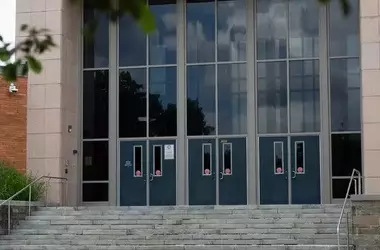
Cheltenham High School Grapples with Netanyahu's Hall of Fame Status Amidst Public Debate
A recent suggestion by Benjamin Netanyahu during a Fox News interview has reignited a contentious debate at Cheltenham High School, his alma mater, regarding his and conservative commentator Mark Levin’s inclusion in the school's hall of fame. This discussion, unfolding in a diverse Philadelphia suburb, highlights deeper community divisions over who should be honored by the institution, raising questions about values, legacy, and public recognition within educational settings.
By Ann Curry Jul 18, 2025
Stephen Colbert's 'The Late Show' to Conclude Next Year
CBS has announced the cancellation of 'The Late Show with Stephen Colbert,' effective next May, a decision Colbert himself revealed during a recent taping. The network cites financial reasons amid a challenging late-night landscape. However, skepticism abounds, especially after Colbert's critique of Paramount Global's settlement with Donald Trump, prompting political figures to question the true motives behind the show's abrupt ending.
By Mona Chalabi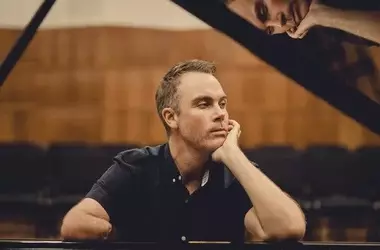 Jul 18, 2025
One Hand, Limitless Sound: Nicholas McCarthy's Journey to the Proms Stage
Nicholas McCarthy, a pianist born without his right hand, is set to perform Maurice Ravel’s Piano Concerto for the Left Hand at London's Royal Albert Hall as part of the prestigious Proms concert series. This highly anticipated performance on Sunday marks a significant moment for McCarthy, 20 years after a dismissive music school principal doubted his ability to even play scales. His unique approach, utilizing the sustain pedal and skilled left-hand movements, creates an auditory illusion that transcends the perceived limitations of a single hand, captivating audiences with a sound that suggests the presence of many.
By Ann Curry