Art Training
Definition and Scope of Career Skill Development

Career skill development is the systematic process of identifying, acquiring, and refining competencies to maintain professional relevance and facilitate upward or lateral mobility within the labor market. This framework distinguishes itself from general education by its focus on "employability"—the alignment of an individual's capabilities with the specific technical and behavioral demands of current and future industrial roles. This article examines the structural best practices for skill development, progressing from objective setting to foundational learning models, core implementation mechanisms, and an objective discussion on the measurement of efficacy and industry trends.
Phase 1: Identifying Objectives through Strategic Alignment
Effective skill development begins with the identification of "High-Value Competencies." This process ensures that time and resources are allocated to skills that offer the highest return on professional investment.
- Gap Analysis: An objective comparison between an individual’s current skill set and the requirements listed in target job descriptions or industry competency frameworks.
- Future-Proofing: Identifying "Transferable Skills" (e.g., data literacy, project management) that remain relevant across multiple roles or industries even as specific technologies change.
- Vertical vs. Horizontal Growth: Deciding whether to deepen expertise in a current niche (specialization) or broaden knowledge across adjacent fields (generalization).
According to data from the World Economic Forum's Future of Jobs Report (), analytical thinking and creative thinking remain the top priorities for skill development through 2027.
Phase 2: Foundational Concepts—The 70-20-10 Framework
The professional development sector widely recognizes the 70-20-10 Model as the foundational framework for successful skill acquisition. This model categorizes how learning occurs in a professional context:
Getty Images
- 70% Experiential Learning: Learning through "stretch assignments" and on-the-job problem solving. This is the most effective mechanism for transforming theoretical knowledge into functional competence.
- 20% Social Learning: Knowledge gained through mentorship, peer-to-peer coaching, and collaborative projects. This phase provides the necessary feedback loops for refinement.
- 10% Formal Learning: Structured education, including university degrees, professional certifications, and workshops. This provides the theoretical bedrock upon which practical skills are built.
Phase 3: Core Mechanisms and Implementation
To implement a skill development plan, professionals and organizations utilize specific mechanisms designed to maximize retention and application.
1. Individual Development Plans (IDP)
The IDP serves as the technical roadmap for growth. It typically includes:
- SMART Goals: Objectives that are Specific, Measurable, Achievable, Relevant, and Time-bound.
- Resource Identification: Cataloging the specific books, courses, or mentors needed to achieve each goal.
- Success Metrics: Defining how "proficiency" will be demonstrated (e.g., successful completion of a project using the new skill).
2. Microlearning and Spaced Repetition
Given the constraints of modern work schedules, Microlearning—breaking complex topics into 5–10 minute modules—is increasingly utilized. When combined with Spaced Repetition Systems (SRS), which schedule reviews at increasing intervals, this mechanism helps move information from short-term to long-term memory.
3. Deliberate Practice
Based on the research of psychologist K. Anders Ericsson, Deliberate Practice involves stepping outside one’s comfort zone to perform tasks that are slightly beyond current capabilities, followed by immediate feedback and repetition.
Phase 4: Presenting the Full Picture and Objective Discussion
While skill development is a primary driver of career success, its implementation involves navigating systemic challenges and variable outcomes.
Measuring Efficacy: The Kirkpatrick Model
To objectively evaluate the success of a skill development initiative, professionals often use the Kirkpatrick Evaluation Model:
Shutterstock
- Reaction: Did the learner find the training relevant?
- Learning: Did the learner acquire the intended knowledge?
- Behavior: Has the learner applied the skill to their daily work?
- Results: Has the application of the skill improved business or career outcomes (e.g., efficiency, promotion)?
Practical Constraints
- Skill Decay: Technical skills have a diminishing "half-life." Without regular application, proficiency decreases, leading to a loss of initial time investment.
- The "Experience Trap": There is a risk of over-investing in formal credentials (the 10%) while under-investing in experiential application (the 70%), resulting in "theoretical proficiency" that lacks operational value.
Phase 5: Summary and Outlook
Career skill development is a cyclical process of assessment, acquisition, and application. By utilizing the 70-20-10 framework and maintaining a structured IDP, professionals can align their growth with market demands. As we move into 2026, the integration of AI-assisted learning paths and Real-time Skill Tracking is expected to provide more granular data on proficiency, allowing for even more precise targeting of developmental efforts.
Phase 6: Q&A (Frequently Asked Questions)
Q: Is it better to be a "Generalist" or a "Specialist"?
A: Current industry trends favor the "T-Shaped Professional"—someone who has deep expertise in one specific area (the vertical bar) but possesses a broad base of general skills (the horizontal bar) to collaborate across disciplines.
Q: How do I find time for skill development while working full-time?
A: Effective implementation relies on "Learning in the Flow of Work." This involves identifying how current work tasks can be turned into learning opportunities (e.g., volunteering for a project that requires a new software skill).
Q: How often should I update my skill development plan?
A: Most professional frameworks suggest a "Quarterly Review" to assess progress and adjust goals based on changes in the industry or the individual's career trajectory.
Q: Are certificates more important than actual experience?
A: From an objective hiring standpoint, certificates act as a "signal" of knowledge, but evidence of application (the 70%)—such as a portfolio or a record of successful projects—is typically prioritized for senior-level roles.

Dynamic Portuguese language coach using music and social media to teach Brazilian culture and slang.
Exploration ArchivesOther Articles
 Dec 24, 2025
Definition and Scope of Professional Skill Building
Professional skill building is the systematic process of identifying, acquiring, and refining the competencies required to perform effectively and advance within a career path. Unlike general education, this process is targeted toward bridging the gap between current proficiency and the evolving technical or behavioral standards of a specific industry. This article examines the construction of a skill-building framework, progressing from objective identification to foundational learning models, core implementation mechanisms, and an objective assessment of contemporary professional development challenges.
 By Carlos Ruiz
 Dec 22, 2025
The Digital Art Community: A Technical and Social Overview
AnArtist Communityin the digital context is a structured network of creators who utilize digital platforms for the exchange of technical knowledge, peer feedback, and professional opportunities. While traditional artist communities often focus on physical residency or shared studio space, digital art communities are defined by theirvirtual proximity, leveraging internet infrastructure to collapse geographical barriers.
 By Jin Park
 Dec 22, 2025
Defining the Digital Art Tablet
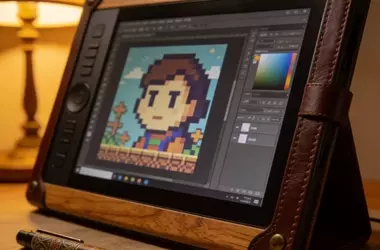
ADigital Art Tablet, also known as a graphics tablet or digitizer, is a specialized computer input device that enables users to hand-draw images, animations, and graphics with a pressure-sensitive stylus. Unlike a standard computer mouse, which relies on relative motion tracking, a digital art tablet utilizes absolute positioning, mapping the tablet's surface directly to the dimensions of the computer monitor. This technology serves as a bridge between traditional tactile art methods and digital processing environments.
 By Dr. Priya Sharma