Corporate Training
Corporate Training Services: Principles, Structures, and Applications

1. Clear Objective
Corporate training services are designed to improve workforce competencies, align employee capabilities with organizational goals, and support professional development. The objective of this article is to provide a neutral overview of corporate training, including learning mechanisms, instructional methods, and the strategic role training plays in organizational performance.
2. Fundamental Concept Analysis
Corporate training encompasses a variety of learning modalities, including:
- Instructor-Led Training (ILT): Traditional classroom or workshop-based instruction with live facilitation.
- E-Learning: Digital training delivered through online platforms, allowing asynchronous or synchronous learning.
- Blended Learning: Combines face-to-face instruction with online components to reinforce learning.
- On-the-Job Training (OJT): Practical skill development within the work environment.
- Workshops and Seminars: Short-term focused learning sessions addressing specific topics or skills.
Training content can range from technical skills, leadership development, compliance, communication, sales, customer service, and industry-specific knowledge. Effective programs are typically aligned with adults learning principles, including active participation, relevance to work tasks, and opportunities for feedback.
3. Core Mechanisms and In-Depth Explanation
Learning in corporate settings relies on cognitive, behavioral, and social mechanisms:
- Cognitive Learning: Acquiring knowledge through structured instruction, problem-solving exercises, and knowledge reinforcement.
- Behavioral Learning: Developing skills through repetition, practice, and performance feedback.
- Experiential Learning: Applying knowledge in practical scenarios, simulations, and role-playing exercises.
- Social Learning: Learning through collaboration, mentoring, peer discussion, and observation.
Training effectiveness is influenced by instructional design, learning objectives, engagement strategies, and alignment with organizational goals. Evaluation methods include pre- and post-training assessments, performance metrics, and feedback surveys to measure knowledge retention, skill application, and behavioral changes.
Technological mechanisms, such as Learning Management Systems (LMS), enable tracking of learner progress, course completion, and skill acquisition metrics. Analytics tools provide insights into training effectiveness, helping organizations optimize content delivery and resource allocation.
4. Comprehensive and Objective Discussion
Corporate training services are widely adopted across industries to improve productivity, compliance, and employee engagement. Benefits include knowledge enhancement, skills development, career progression support, and alignment with organizational strategy.
Limitations include variability in learner engagement, differences in prior knowledge, accessibility issues, and the challenge of measuring long-term impact. Training outcomes are highly dependent on program design, facilitator expertise, and organizational culture.
Emerging trends involve microlearning (short, focused learning modules), mobile learning, gamification, and AI-driven adaptive learning that customizes content based on learner progress. These approaches aim to increase engagement and effectiveness while accommodating diverse learning styles.
Corporate training does not guarantee performance improvement on its own; it functions as a tool to support skill development and facilitate organizational objectives. Training initiatives are most effective when integrated with broader human resource strategies and continuous learning cultures.
5. Summary and Outlook
Corporate training services provide structured educational experiences to enhance employee competencies and align them with organizational goals. Core mechanisms include cognitive, behavioral, experiential, and social learning processes supported by technological platforms and analytics.
Future developments may involve AI-driven content personalization, immersive learning technologies such as virtual reality simulations, enhanced microlearning platforms, and increased emphasis on soft skills and leadership development. Continuous evaluation and adaptation remain critical for sustained effectiveness.
6. Question and Answer Section
Q1: What are corporate training services?
Corporate training services are structured programs designed to develop employees’ skills, knowledge, and performance in alignment with organizational goals.
Q2: What learning modalities are used in corporate training?
Modalities include instructor-led training, e-learning, blended learning, on-the-job training, workshops, and seminars.
Q3: What mechanisms support learning in corporate training?
Cognitive, behavioral, experiential, and social learning mechanisms facilitate knowledge acquisition and skill development.
Q4: What are common challenges in corporate training?
Challenges include learner engagement, variability in prior knowledge, accessibility, and measuring long-term impact.
Q5: How is training effectiveness evaluated?
Effectiveness is measured using assessments, performance metrics, feedback surveys, and analytics from Learning Management Systems.
Sources (Links Only)
https://www.shrm.org/resourcesandtools/hr-topics/organizational-and-employee-development/pages/default.aspx
https://www.cipd.co.uk/knowledge/fundamentals/people/development/factsheet
https://www.trainingindustry.com/wiki/learning-technologies/corporate-training/
https://www.td.org/insights/measuring-training-effectiveness
https://www.ncbi.nlm.nih.gov/pmc/articles/PMC6359737/

Contemporary dance choreographer and instructor exploring movement as a form of emotional expression.
Exploration ArchivesOther Articles
 Mar 30, 2026
Teamwork Training: Concepts, Strategies, and Evidence-Based Insights
Teamwork training refers to structured educational programs designed to enhance collaboration, communication, and coordinated problem-solving among individuals working collectively. This article provides a neutral and evidence-based overview of teamwork training, defining its core concepts, explaining mechanisms that influence team dynamics, exploring practical strategies, and examining broader organizational implications. The discussion concludes with a summary, prospective outlook, and a question-and-answer section for clarification.
 By Chloe Davis
 Mar 27, 2026
Employee Onboarding Training: Concepts, Processes, and Organizational Context
Employee onboarding training refers to the structured process through which newly hired individuals are introduced to an organization’s roles, expectations, policies, and working environment. This article explains the concept of onboarding training, outlines its foundational components, explores how it operates in practice, and presents a neutral overview of its broader organizational role. A structured progression is followed: objective clarification, conceptual explanation, mechanisms, comprehensive discussion, summary, and a question-and-answer section.
By Chloe Davis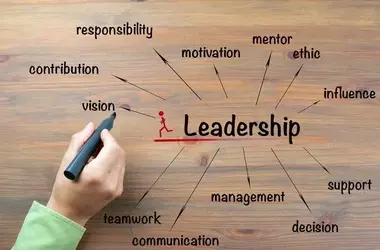 Mar 24, 2026
Leadership Development Training: A Scientific Overview of Theories, Mechanisms, and Applications
This article provides a neutral and structured overview of leadership development training, defined as a process aimed at enhancing an individual’s capacity to guide, influence, and manage teams or organizations. It outlines objectives, examines foundational theories, explores mechanisms of skill development, and presents an objective discussion of applications and limitations. A concluding section and question-and-answer segment clarify key points.
By Chloe Davis