News
Cooperstown's Summer Divide: Baseball vs. Opera in a Tight Market

In Cooperstown, New York, a town intrinsically linked with America's favorite pastime, the summer season unfolds with a curious duality. While the National Baseball Hall of Fame draws countless enthusiasts, especially youth teams and their families, creating a vibrant economic surge, this annual pilgrimage inadvertently strains local resources, particularly accommodations. The massive influx of baseball visitors, reaching up to 100,000 over a summer, makes securing a hotel room a formidable task, a challenge acutely felt by attendees of the distinguished Glimmerglass Festival, an opera event seeking its own cultural devotees.
The accommodation crunch has become a significant point of contention for the Glimmerglass Festival, as its patrons often find themselves scrambling for lodging, sometimes having to settle for hotels a considerable distance away. Despite the festival's efforts to assist, such as providing lists of off-site options, the struggle for a convenient stay deters some opera enthusiasts. This situation highlights a broader impact on the town's infrastructure, affecting daily life for residents with increased traffic and crowded public spaces. Yet, this intense seasonal activity undeniably injects substantial revenue into the local economy, transforming Cooperstown into a bustling hub during the warmer months.
Ultimately, Cooperstown embodies a fascinating intersection of American culture and community spirit. While the town navigates the logistical complexities arising from its dual appeal, the coexistence of baseball and opera, though challenging, fosters a rich and diverse atmosphere. It serves as a testament to how different passions can converge in one locale, creating both obstacles and opportunities, and encouraging creative solutions for shared prosperity and enjoyment. The willingness of both residents and visitors to adapt, coupled with the enduring appeal of these attractions, ensures Cooperstown remains a cherished destination for all.
Pulitzer Prize-winning investigative journalist who helped break the Watergate scandal.
Other Articles
 Aug 08, 2025
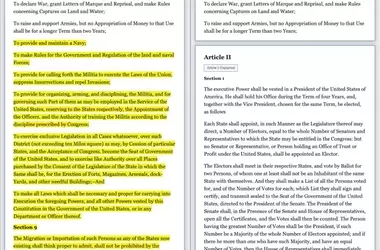
Library of Congress Website Constitution Omission Sparks Online Debate
A temporary omission of sections from Article 1 of the U.S. Constitution on the Library of Congress website led to public concern and misinformation. Internet users discovered the missing text, including provisions on habeas corpus and limits on governmental power. The Library of Congress attributed the issue to a coding error, which was quickly rectified. This incident highlighted the critical difference between website alterations and the formal constitutional amendment process.
By Michele Norris Aug 08, 2025
Deep-Sea Creatures Spark National Debate in Argentina
An unexpected live stream of marine life from the Mar del Plata canyon has captivated Argentinians, turning crustaceans and sea cucumbers into national symbols. This scientific endeavor, led by Conicet, Argentina's national scientific council, has inadvertently fueled a public discourse regarding President Javier Milei's controversial budget cuts to state-funded research, highlighting the unexpected ways science can intersect with politics and popular culture.
By Lester Holt Aug 08, 2025
The Bobby Phenomenon: Teen Idols of the 1960s
The 1960s music scene was dominated by a surprising number of male artists named Bobby. From pop sensations like Bobby Vee and Bobby Vinton to soul and country stars such as Bobby Womack and Bobby Goldsboro, the name 'Bobby' became synonymous with teen idol status. This prevalence reflected the popularity of the name Robert in prior decades, making a generation of 'Bobbys' ready to charm audiences with their music. Their reign, however, largely concluded by 1970 as musical tastes evolved.
By Rageh Omaar