News
Appeals Court Upholds Ban on Indiscriminate Immigration Enforcement

Protecting Rights: Judiciary Stands Against Arbitrary Immigration Tactics
Appellate Court Maintains Crucial Restraint on Immigration Operations
A federal appellate court recently confirmed a preliminary order prohibiting the Trump administration from carrying out broad, indiscriminate immigration arrests and detentions across Southern California. This ruling marks a significant judicial check on the government's approach to immigration enforcement, affirming the need for constitutional compliance in such operations.
Judicial Scrutiny and Constitutional Concerns
The Ninth U.S. Circuit Court of Appeals conducted a review following a lower court's injunction issued in July. The federal government had sought to overturn this temporary restraining order, asserting that it impeded their ability to enforce immigration statutes. However, the appeals court sided with the initial ruling, emphasizing the documented evidence of unconstitutional practices.
Advocacy Groups Challenge Discriminatory Practices
Immigrant rights organizations initiated legal action last month, alleging that the Trump administration's aggressive immigration policies in Southern California disproportionately targeted individuals based on their appearance. The lawsuit, brought forth by several detained immigrants and U.S. citizens, highlighted concerns about discriminatory profiling and unwarranted detentions.
The Lower Court's Foundational Ruling
The initial judicial order, issued by Judge Maame E. Frimpong, underscored a substantial body of evidence indicating that federal immigration enforcement methods infringed upon constitutional protections. Her ruling specifically disallowed the use of factors such as ethnicity, accent, presence at certain locations, or occupation as the sole bases for reasonable suspicion in detaining individuals.
Southern California: A Hotbed of Immigration Conflict
The Los Angeles area has become a focal point for disputes regarding the Trump administration's assertive immigration strategy. This has led to widespread protests and the deployment of military personnel. Federal agents have reportedly apprehended individuals without legal status in various public and private settings, including those who have resided in the country for many years.
Case in Point: A Citizen's Unjust Detention
Among the plaintiffs in the lawsuit is Los Angeles resident Brian Gavidia, whose detention by federal agents was captured on video. The footage shows Gavidia asserting his U.S. citizenship during the apprehension, illustrating the fears of mistaken identity and unconstitutional arrests faced by many in the community. An attorney from the American Civil Liberties Union articulated the concern that even U.S. citizens could be subjected to arbitrary detention based on their background or location.
Government's Arguments and Judicial Rebuttal
The federal government argued that it had insufficient time to gather and present evidence due to the rapid timeline of the lawsuit. They also contended that the lower court's order was overly broad and that the plaintiffs lacked adequate proof of an official policy of stopping individuals without reasonable suspicion. Government representatives expressed concern that the ruling's limitations on using certain factors for suspicion were too restrictive.
Judges Question the Government's Stance
During the hearing, the appeals court judges critically examined the government's arguments. Judge Jennifer Sung pointed out that while the factors cited (race, language, location, occupation) could be considered, they alone were insufficient to establish reasonable suspicion, especially in a diverse area like Los Angeles where such characteristics are common among both documented and undocumented residents. She also posed a poignant question, challenging the government's claim that the ruling caused harm if they were already adhering to its principles.
Noted journalist and author, though primarily known as a novelist, her work often comments on social and political issues.
Other Articles
 Aug 02, 2025
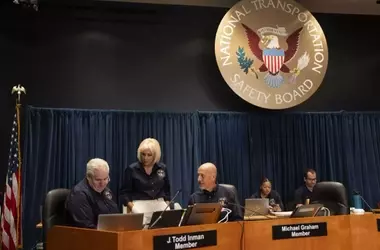
Key Insights from the NTSB's Investigation into the DCA Mid-Air Collision
A recent three-day hearing by the National Transportation Safety Board (NTSB) has revealed crucial details regarding the fatal mid-air collision near Washington, D.C., last January. The incident, which resulted in 67 fatalities, highlighted issues with altimeter accuracy, helicopter flight paths, and air traffic control procedures. The NTSB's findings point to systemic problems within aviation safety protocols and operational pressures at busy airports. Authorities are now considering significant changes to prevent similar tragedies.
By Isabel Allende Aug 01, 2025
States Challenge Trump Administration on Gender-Affirming Healthcare Restrictions
A coalition of 16 states and the District of Columbia has launched legal action against the Trump administration. The lawsuit defends children's hospitals and medical professionals who provide gender-affirming care to minors, alleging that the administration's attempts to halt such services are unlawful. This significant legal challenge underscores the ongoing debate over healthcare access for transgender youth.
By Isabel Allende Aug 01, 2025
Avian Separation: Oxford Researchers Uncover "Divorce" Behavior in Songbirds
A groundbreaking study conducted by Oxford University has revealed a surprising social dynamic among a common European songbird species: instances of 'divorce' between breeding partners. This research sheds new light on the complexities of avian relationships, challenging previous assumptions about lifelong pair bonds in certain bird populations.
By Carl Bernstein