News
Appeals Court Affirms CFPB Layoffs Amidst Administration Efforts to Reshape Agency

The Consumer Financial Protection Bureau (CFPB) finds itself at a pivotal juncture, as a recent federal appeals court decision has cleared the path for the Trump administration to implement substantial workforce reductions. This ruling, which has sparked considerable debate, allows for the termination of a significant number of the agency's employees, fundamentally altering its operational capacity and prompting widespread concern among consumer advocacy groups. The legal battle underscores a broader political struggle over the CFPB's role and independence, an institution originally established to safeguard financial consumers in the wake of the 2008 financial crisis.
Federal Appeals Court Backs CFPB Layoffs, Signaling a Shift in Consumer Protection Landscape
On a significant Friday in mid-August 2025, a three-judge panel of the U.S. Court of Appeals for the D.C. Circuit issued a consequential ruling that allows the Consumer Financial Protection Bureau (CFPB) to proceed with massive staff reductions. This decision grants the Trump administration the authority to move forward with plans to lay off over 1,400 employees, leaving approximately 200 staff members remaining within the agency. The court's majority opinion, penned by Judge Gregory Katsas, asserted that claims related to employment loss must be handled through the Civil Service Reform Act's specialized review system, thereby vacating a preliminary injunction that had previously blocked these extensive layoffs.
Conversely, Judge Nina Pillard, in a dissenting opinion, strongly contended that the idea of the agency's continued existence being subject to unilateral presidential decree was unsustainable, emphasizing the potential non-existence of the CFPB had the district court not intervened earlier. This legal deliberation highlights the contrasting judicial philosophies at play, with Judges Katsas and Neomi Rao being Trump appointees, and Judge Pillard having been nominated by former President Obama. The ruling's implementation has been temporarily delayed, allowing for potential motions for rehearing within a 45-day window.
The CFPB, a body funded by transfers from the Federal Reserve System and established by Congress through the Dodd-Frank Act following the 2008 financial crisis, is mandated with numerous responsibilities aimed at protecting consumers. These include regulating consumer financial products and services and managing consumer complaints. However, the agency has become a focal point for the Trump administration, and some factions within Silicon Valley and Wall Street, who argue that its regulatory scope is excessive. The administration's stated goal is a \"more streamlined\" bureau, a vision that consumer advocates fear would render the CFPB incapable of fulfilling its congressionally mandated duties.
Prominent figures have voiced strong reactions to the court's decision. U.S. Attorney General Pamela Bondi expressed approval, stating that the CFPB is now free to adjust itself to better serve the American public. In stark contrast, Cat Farman, president of the CFPB union, denounced the ruling as a \"disgrace,\" warning that it empowers the executive branch to undermine vital public services. Senator Elizabeth Warren (D-Mass.), who spearheaded the CFPB's creation, criticized the decision for overlooking what she described as the Trump administration's \"lawless attempt to destroy\" the agency. Similarly, Mike Pierce, a former deputy assistant director of the CFPB, warned that dismantling the agency would leave American consumers vulnerable to financial exploitation, particularly by Wall Street and Big Tech.
This ruling is a chapter in a protracted legal saga. The National Treasury Employees Union, representing CFPB staff, initiated legal action to prevent the layoffs, arguing against the executive branch's unilateral power to abolish a congressional agency. An earlier April 2025 ruling by the DC circuit appellate court had permitted staff reductions contingent on a \"particularized assessment\" of which employees were deemed \"unnecessary.\" Following this, the administration quickly moved to implement new firing plans, aiming for a workforce of approximately 200 to align with new leadership priorities. However, federal Judge Amy Berman Jackson had previously blocked these efforts, suspecting the administration was merely re-packaging its layoff plans without genuine particularization, expressing concern that the CFPB had already scaled back its enforcement actions in areas like medical debt and student loans. With the recent passage of the One Big Beautiful Bill Act in July, the CFPB's budget was nearly halved, although it retains the ability to request funds from Congress. Despite a recent Supreme Court ruling permitting the Trump administration to resume mass federal layoffs, the union maintains that this decision does not directly impact the CFPB case. The possibility of further appeals by the workers' union to the full DC Circuit and even the U.S. Supreme Court remains open.
This judicial outcome raises profound questions about the balance of power between different branches of government and the future of consumer financial protection. It highlights the vulnerability of independent agencies to shifts in political tides and the persistent tension between regulatory oversight and economic liberalization. For the average citizen, the implications are significant: a weakened CFPB could lead to diminished safeguards against predatory financial practices, making it imperative for the public and advocacy groups to remain vigilant and engaged in this ongoing narrative. The ultimate fate of the CFPB, and by extension, the financial well-being of millions, now hinges on further legal challenges and the enduring commitment to its foundational mission.
Chief International Anchor for CNN, renowned for war reporting and interviewing world leaders.
Other Articles
 Aug 15, 2025
Children's Mental Health Crisis: Extended ER Stays Highlight Systemic Gaps
A recent study reveals that nearly one in ten children on Medicaid experiencing mental health crises endure prolonged stays in emergency rooms due to a critical shortage of psychiatric care facilities. Depressive disorders and suicidal ideation are primary reasons for these extended waits, underscoring a nationwide challenge in providing timely and adequate mental health support for young people.
By Christianne Amanpour Aug 15, 2025
Unexpected Encounter: Presidents Meet in Alaska
Two rival presidents, Trump and Putin, convened in Alaska for an unscheduled meeting. The highly anticipated encounter, marked by an unusual red-carpet greeting and a display of military might, underscored the complex dynamics between the nations. Despite the ceremonial facade, underlying tensions concerning the ongoing conflict in Ukraine persisted, leaving many questions unanswered about the potential for peace.
By Christianne Amanpour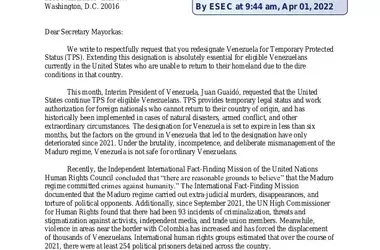 Aug 15, 2025
Refugees' Journey: From Venezuelan Strife to Wisconsin Hope
This article chronicles the challenging journey of Venezuelan refugees, Luismar Liendo and Edwin Perez, who sought asylum in the United States, only to face an abrupt withdrawal of federal support upon their arrival in Wisconsin. It highlights the broader impact of altered immigration policies on refugees and the inspiring resilience of individuals and communities who stepped up to provide aid and foster a supportive network amidst uncertainty, illustrating hope and self-sufficiency in a new land.
By Christianne Amanpour