News
Afghanistan: A Nation's Struggle Four Years Post-US Withdrawal

Four Years On: Afghanistan's Enduring Test of Resilience Amidst Shifting Fortunes
The Unfolding Reality: Afghanistan's Post-Withdrawal Landscape
Four years have elapsed since the departure of U.S. forces from Afghanistan and the subsequent re-establishment of the Taliban's authority. This period has seen a dramatic shift in the nation's socio-political fabric, with significant implications for its populace. For numerous groups within Afghan society, daily life has become increasingly difficult, marked by a decline in freedoms and access to essential services.
Contrasting Narratives: Assessing Afghanistan's Current State
Despite mounting evidence of deteriorating conditions for many, the Trump administration has put forth a contentious argument that Afghanistan has experienced sufficient improvements to safely allow the return of its nationals. This assertion suggests a belief that the nation's stability has reached a point where repatriation efforts would not endanger the individuals involved. However, this viewpoint stands in stark opposition to a considerable body of reports detailing the worsening plight of Afghans.
Pulitzer Prize-winning investigative journalist who helped break the Watergate scandal.
Other Articles
 Aug 14, 2025
Unlocking the Unspoken: Brain-Computer Interfaces Translate Thought into Speech
Pioneering neuroscience research is making strides in decoding 'inner speech' directly from brain activity, offering a beacon of hope for individuals unable to communicate verbally. This advancement in brain-computer interfaces (BCI) could revolutionize how patients interact with the world, transforming imagined words into audible language while addressing crucial privacy concerns through innovative control mechanisms.
By Carl Bernstein Aug 14, 2025
IRS Commissioner Billy Long's Brief Tenure and Sudden Departure
Billy Long, appointed as IRS commissioner, faced a turbulent and brief tenure, lasting less than two months. Despite President Trump's strong support, Long's independent vision for the IRS clashed with Treasury Secretary Scott Bessent, leading to a power struggle. Long's lack of experience in tax policy and his public gaffes further complicated his position, culminating in his departure and nomination as ambassador to Iceland.
By Christianne Amanpour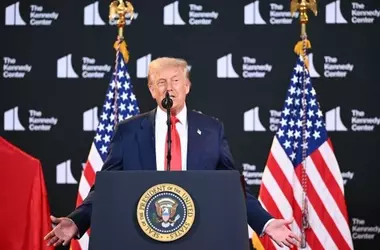 Aug 14, 2025
Escalating Executive Pressure: How Political Intervention Shapes Corporate America
The current administration is intensifying its influence over American corporations, leading to concerns about the erosion of free-market principles. Recent events, such as demanding a share of a private company's sales and publicly criticizing executives, highlight an unprecedented level of political interference in business operations. This shift prompts questions about the future of U.S. capitalism and the reluctance of CEOs to openly challenge these new dynamics.
By Mona Chalabi