Medical Devices
What Wearable Medical Devices Can and Cannot Tell You: A Scientific Overview

Wearable medical devices are electronic instruments designed to be worn on the body—often as smartwatches, rings, patches, or clothing—to continuously or intermittently monitor physiological parameters. These devices utilize advanced sensors to track metrics such as heart rate, oxygen saturation, physical activity, and sleep patterns. While they provide an unprecedented stream of longitudinal data, it is critical to distinguish between their role as "wellness monitors" and their limitations as "diagnostic tools." This article provides a neutral, evidence-based exploration of wearable technology, detailing the optical and electrical mechanisms of data collection, the objective accuracy of these sensors compared to clinical standards, and the boundary between data observation and medical interpretation. The following sections follow a structured trajectory: defining the scope of wearable biosensing, explaining the core mechanisms of signal processing, presenting a comprehensive view of technical capabilities and limitations, and concluding with a technical inquiry section to address common questions regarding data validity and clinical utility.

1. Basic Conceptual Analysis: The Wearable Biosensing Spectrum
To analyze wearable medical devices, one must first categorize them by their intended function and regulatory status.
Wellness Trackers vs. Medical-Grade Wearables
- Consumer Wellness Devices: Primarily designed for tracking fitness and lifestyle metrics (e.g., steps, general heart rate). They are often not subject to stringent clinical validation.
- FDA-Cleared Wearables: Devices that have undergone review by the U.S. Food and Drug Administration (FDA) or similar international bodies. These are cleared for specific functions, such as detecting atrial fibrillation (AFib) or monitoring blood glucose.
The Concept of "Surrogate" Data
Most wearables do not measure internal physiological states directly. Instead, they measure "surrogate" signals—such as light reflection on the skin or movement via accelerometers—and use mathematical algorithms to estimate the actual biological metric.
2. Core Mechanisms: How Sensors Interpret the Body
The technical efficacy of wearables relies on two primary sensing technologies: Photoplethysmography (PPG) and Electrocardiography (ECG).
Photoplethysmography (PPG)
This is the most common technology in wrist-based devices.
- Mechanism: The device shines green or red LED light into the skin. As the heart beats, blood volume in the microvasculature increases and decreases, changing the amount of light reflected back to the sensor.
- Signal Extraction: Algorithms filter out "noise" (like arm movement) to calculate the heart rate and heart rate variability (HRV). Red and infrared light are specifically used to estimate oxygen saturation ($SpO_2$) based on the absorption properties of hemoglobin.
Micro-Electrocardiography (ECG)
Some advanced wearables feature a metal electrode on the back and another on a button or bezel.
- Mechanism: When the user touches the electrode, it completes a circuit across the chest, allowing the device to record the heart's electrical activity (Single-lead ECG).
- Function: This provides a more accurate view of the heart's rhythm than PPG, specifically designed to identify irregularities in the electrical signal.
3. Presenting the Full Picture: Capabilities and Objective Limitations
Understanding what a device "cannot" tell you is as vital as understanding what it can.
What Wearables CAN Tell You
- Resting Heart Rate Trends: They are highly effective at identifying long-term changes in baseline heart rate, which can indicate changes in fitness or physiological stress.
- Rhythm Irregularities: FDA-cleared algorithms can identify patterns consistent with Atrial Fibrillation (AFib) with high specificity in a resting state.
- Sleep Architecture (Estimates): By combining movement and HRV data, they can estimate time spent in Light, Deep, and REM sleep cycles.
- Oxygen Saturation Trends: They can identify drops in $SpO_2$ during sleep, which may correlate with respiratory disturbances.
What Wearables CANNOT Tell You
- Absolute Accuracy in Motion: During high-intensity exercise, PPG sensors often lose accuracy due to "motion artifacts" and changes in skin blood flow.
- Detection of a Myocardial Infarction: A single-lead wearable ECG cannot detect a heart attack. A heart attack is a "plumbing" issue (blood flow), while a wearable ECG only monitors the "electrical" system from a single angle.
- Blood Pressure (Directly): While some devices attempt to estimate blood pressure using "Pulse Arrival Time," they do not currently match the accuracy of an oscillometric arm cuff.
- Definitive Diagnosis: Wearables provide notifications of potential issues. They do not provide a diagnosis, which requires a comprehensive clinical evaluation.
Comparative Overview of Data Accuracy
| Metric | Wearable Technology | Clinical Gold Standard | Objective Accuracy Gap |
| Heart Rate | PPG (Optical) | 12-Lead ECG (Electrical) | High at rest; Variable during exercise |
| Oxygen ($SpO_2$) | Reflective Oximetry | Arterial Blood Gas (ABG) | $\pm$ 2-3% in optimal conditions |
| Steps | 3-Axis Accelerometer | Manual Tally | 5-10% variance depending on gait |
| Sleep | Actigraphy + HRV | Polysomnography (PSG) | Moderate (overestimates total sleep) |
4. Summary and Future Outlook: Beyond Step Counting
The trajectory of wearable technology is moving toward non-invasive monitoring of biochemical markers.
Future Directions in Research:
- Continuous Glucose Monitoring (CGM): The integration of minimally invasive or non-invasive sensors that provide real-time sugar levels without finger-pricks.
- Sweat Analysis: Wearable patches that analyze the electrolyte and metabolite content of sweat to monitor hydration and lactic acid levels.
- Core Temperature Sensing: New sensors capable of estimating internal body temperature via heat-flux measurement, rather than just skin surface temperature.
- AI Predictive Modeling: Utilizing machine learning to identify the "digital signatures" of illness (such as a slight rise in RHR and drop in HRV) days before physical symptoms appear.
5. Q&A: Clarifying Technical and Clinical Inquiries
Q: Can skin tone affect the accuracy of wearable sensors?
A: Yes. Scientific data indicates that green-light PPG sensors can be less accurate on darker skin tones because melanin absorbs green light more efficiently than lighter skin, potentially creating a weaker signal-to-noise ratio. Manufacturers are increasingly using infrared sensors to mitigate this effect.
Q: Is a "High Heart Rate" notification always a cause for concern?
A: Not necessarily. Wearables often trigger notifications based on pre-set thresholds. If the user is active, stressed, or has consumed caffeine, the heart rate may rise naturally. The notification is a prompt for the user to evaluate their current context.
Q: Why does my wearable show different sleep data than my bedside monitor?
A: Wearables use Actigraphy (movement) and heart rate. Bedside monitors often use "Ballistocardiography" (sensing vibrations in the bed) or sound. Neither is as accurate as Polysomnography, which measures brain waves ($EEG$), the only true way to define sleep stages.
Q: Does "Water Resistance" mean I can track swimming accurately?
A: While the device may be water-resistant, water can get between the sensor and the skin, refracting the LED light and significantly reducing the accuracy of heart rate tracking during swimming.
Q: How is wearable data protected?
A: Security varies by manufacturer. Technical standards generally require encryption during data transfer. However, consumer-grade wellness data is often not protected by the same legal frameworks (like HIPAA in the US) as data stored in a formal medical record.
This article serves as an informational resource regarding the technical mechanisms and clinical boundaries of wearable medical devices. For individualized medical evaluation, diagnostic assessment, or the development of a health management plan, consultation with a licensed healthcare professional is essential.

Other Articles
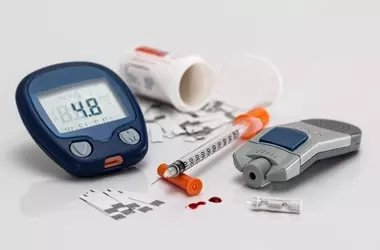 Dec 30, 2025
How Home Monitoring Devices Support Long-Term Health Awareness
Home monitoring devicesencompass a specialized category of portable electronic instruments designed to measure and record physiological data outside of traditional clinical environments. These technologies—ranging from automated blood pressure cuffs to digital glucose meters and wearable pulse oximeters—serve as objective tools for tracking vital signs over extended periods. The core concept involves the systematic collection of personal health metrics to foster long-term health awareness and facilitate data-driven communication with healthcare providers. This article provides a neutral exploration of how these devices function, the biological parameters they quantify, the technical frameworks of data longitudinality, and the objective limitations of self-monitoring. The following sections follow a structured trajectory: defining the scope of home-based diagnostics, explaining the core mechanisms of data acquisition, presenting a comprehensive view of the benefits and constraints of long-term tracking, and concluding with a technical inquiry section to address common questions regarding device accuracy and data management.
 By Dr. Marcus Lee
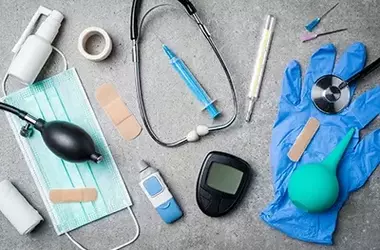 Dec 30, 2025
Understanding Home Medical Devices for Daily Health Monitoring
Home medical devicesare a category of non-invasive or minimally invasive instruments designed for use outside of professional clinical settings to measure, record, or monitor physiological parameters. These devices enable individuals to track vital signs—such as blood pressure, heart rate, blood glucose levels, and oxygen saturation—providing data that can assist in the long-term management of chronic conditions or general wellness tracking. This article provides a neutral, science-based exploration of common home monitoring technologies, detailing the physical and electronic mechanisms they utilize, the objective standards for their accuracy, and the regulatory frameworks governing their use. The following sections follow a structured trajectory: defining the parameters of home diagnostics, explaining the core mechanisms of oscillometry and biosensing, presenting a comprehensive view of data integration and clinical limitations, and concluding with a technical inquiry section to address common questions regarding calibration and maintenance.
 By Dr. Alejandro Ruiz
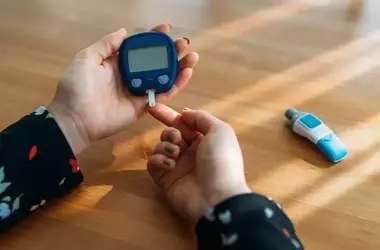 Dec 26, 2025
Understanding Blood Glucose Monitoring Technology: A Comprehensive Scientific Overview
Effective metabolic management relies on the ability to quantify biological data accurately.Blood glucose monitors, also known as glucometers, are medical devices designed to measure the concentration of glucose within the blood. This technology provides individuals and healthcare professionals with immediate data regarding how the body processes sugar, which is a critical component of managing conditions such as diabetes. The following discussion explores the scientific principles behind these devices, progressing from basic components to the complex electrochemical reactions that enable measurement. It also presents an objective comparison of different technological modalities, explores clinical standards for accuracy, and concludes with a look at future developments in physiological monitoring. By moving from foundational chemistry to practical Q&A, this resource serves as an informative guide for understanding the role of glucose monitoring in modern health assessment.
 By Emily Watson