Medical Devices
Understanding Home Medical Devices for Daily Health Monitoring

Home medical devices are a category of non-invasive or minimally invasive instruments designed for use outside of professional clinical settings to measure, record, or monitor physiological parameters. These devices enable individuals to track vital signs—such as blood pressure, heart rate, blood glucose levels, and oxygen saturation—providing data that can assist in the long-term management of chronic conditions or general wellness tracking. This article provides a neutral, science-based exploration of common home monitoring technologies, detailing the physical and electronic mechanisms they utilize, the objective standards for their accuracy, and the regulatory frameworks governing their use. The following sections follow a structured trajectory: defining the parameters of home diagnostics, explaining the core mechanisms of oscillometry and biosensing, presenting a comprehensive view of data integration and clinical limitations, and concluding with a technical inquiry section to address common questions regarding calibration and maintenance.

1. Basic Conceptual Analysis: The Evolution of Point-of-Care Testing
To analyze home medical devices, one must first identify the transition of diagnostic technology from the laboratory to the domestic environment. This shift is categorized under Point-of-Care Testing (POCT).
Defining Parameters
A home medical device must meet specific criteria for non-professional use:
- Ease of Operation: The device must provide clear results without requiring advanced medical training.
- Portability: The instrument must be compact and battery-powered or mains-connected for domestic stability.
- Safety: The mechanism of measurement must pose minimal risk to the user.
Common Device Categories
- Hemodynamic Monitors: Blood pressure monitors and pulse oximeters.
- Metabolic Monitors: Blood glucose meters and body composition scales.
- Respiratory Monitors: Peak flow meters and nebulizer-integrated trackers.
- Cardiac Monitors: Personal Electrocardiogram (ECG/EKG) devices.
Regulatory Oversight
In the United States, the Food and Drug Administration (FDA) classifies home medical devices based on risk. Most daily monitoring tools fall under Class II, meaning they require "special controls" to ensure a reasonable assurance of safety and effectiveness.
2. Core Mechanisms: Oscillometry, Photoplethysmography, and Biosensing
The efficacy of home devices is rooted in their ability to translate biological signals into digital data through specific physical principles.
Oscillometric Blood Pressure Measurement
Most digital home blood pressure monitors do not use a stethoscope (the auscultatory method). Instead, they use oscillometry.
- Mechanism: As the cuff deflates, the device senses the vibrations (oscillations) of the blood flowing through the brachial artery.
- Data Processing: An internal algorithm identifies the point of maximum oscillation (mean arterial pressure) and calculates the systolic and diastolic values based on standardized ratios.
Photoplethysmography (PPG) in Pulse Oximeters
Pulse oximeters measure the oxygen saturation ($SpO_2$) in the blood using light.
- Mechanism: The device emits two wavelengths of light: red and infrared. Oxygenated hemoglobin absorbs more infrared light, while deoxygenated hemoglobin absorbs more red light.
- Calculation: The ratio of the light transmitted through the finger allows the device to calculate the percentage of hemoglobin saturated with oxygen.
Electrochemical Biosensing for Glucose
Blood glucose meters utilize a chemical reaction to determine sugar levels.
- Mechanism: A small blood sample is placed on a test strip containing the enzyme glucose oxidase. This reaction creates an electrical current.
- Result: The strength of the current is directly proportional to the concentration of glucose in the blood, which the meter displays in $mg/dL$ or $mmol/L$.
3. Presenting the Full Picture: Data Integration and Objective Limitations
While home devices offer convenience, they are subject to technical and environmental variables that can influence their readings.
Comparative Overview of Home Monitoring Devices
| Device | Measured Parameter | Primary Mechanism | Clinical Utility |
| Blood Pressure Monitor | Systolic/Diastolic Pressure | Oscillometry | Hypertension management |
| Pulse Oximeter | Oxygen Saturation ($SpO_2$) | Photoplethysmography | Respiratory monitoring |
| Glucose Meter | Blood Sugar Concentration | Electrochemical Biosensing | Diabetes management |
| Digital Thermometer | Core Body Temperature | Thermistor/Infrared Sensor | Fever detection |
| Personal ECG | Heart Electrical Activity | Electrodes/Bio-impedance | Arrhythmia detection |
Factors Influencing Accuracy
Data from the American Heart Association (AHA) and the World Health Organization (WHO) highlight that "user error" is a significant factor in data variance.
- Cuff Size: Using a blood pressure cuff that is too small can artificially elevate readings by 2 to 10 $mmHg$.
- Motion Artifacts: Movement during a pulse oximetry reading can cause the device to lose the "pulse signal," leading to inaccurate $SpO_2$ data.
- Environmental Temperature: Extremes in temperature can affect the chemical reactions on glucose test strips.
Data Connectivity and the "Internet of Medical Things" (IoMT)
Many modern devices now feature Bluetooth or Wi-Fi connectivity, allowing data to be uploaded to cloud platforms. This facilitates Remote Patient Monitoring (RPM), where healthcare providers can review trends over time without requiring the patient to visit a clinic.
4. Summary and Future Outlook: AI and Wearable Integration
The future of home health monitoring involves the transition from "reactive" measurements to "continuous" tracking.
Future Directions in Research:
- Continuous Glucose Monitors (CGM): Devices that use a tiny subcutaneous sensor to track glucose levels in the interstitial fluid 24/7, reducing the need for finger-prick testing.
- AI Diagnostics: Algorithms capable of analyzing ECG patterns to identify early signs of atrial fibrillation before symptoms become apparent.
- Non-invasive Sensing: Research into laser-based glucose monitoring or blood pressure tracking via optical sensors in smartphones.
- Bio-integrated Sensors: Temporary "electronic tattoos" that adhere to the skin to monitor sweat electrolytes or hydration levels.
5. Q&A: Clarifying Common Technical Inquiries
Q: How often should home medical devices be calibrated?
A: Calibration requirements vary. Most digital blood pressure monitors should be checked for accuracy by a professional every 1–2 years. Glucose meters usually require "control solution" tests whenever a new vial of strips is opened to ensure the meter and strips are working together correctly.
Q: Why does my home blood pressure reading differ from the doctor's office?
A: This can be due to "White Coat Hypertension" (anxiety in a clinical setting) or "Masked Hypertension" (lower readings in a clinic than at home). Furthermore, doctors often use the auscultatory method (manual), while home devices use the oscillometric method (automated), which can lead to slight inherent variations in the calculated values.
Q: Can a pulse oximeter detect a heart attack?
A: No. A pulse oximeter measures blood oxygen levels and pulse rate. It does not monitor the electrical activity of the heart or the presence of a blockage in coronary arteries. A personal ECG device is more suited for monitoring heart rhythm, but neither replaces an emergency clinical evaluation.
Q: Does nail polish affect pulse oximetry readings?
A: Yes. Darker nail polishes (especially blue, black, or green) can block the specific wavelengths of light used by the oximeter, potentially resulting in a falsely low oxygen saturation reading.
Q: What is the "Validated Device" list?
A: Organizations like the Association for the Advancement of Medical Instrumentation (AAMI) maintain lists of devices that have passed independent clinical validation protocols. Clinicians often suggest checking if a home device appears on these validated lists to ensure the underlying algorithms meet international accuracy standards.
This article serves as an informational resource regarding the technical and functional aspects of home medical devices. For individualized medical evaluation, diagnostic assessment, or the development of a health management plan, consultation with a licensed healthcare professional is essential.

Community health consultant focused on patient education.
Exploration ArchivesOther Articles
 Dec 26, 2025
Understanding Blood Glucose Monitoring Technology: A Comprehensive Scientific Overview
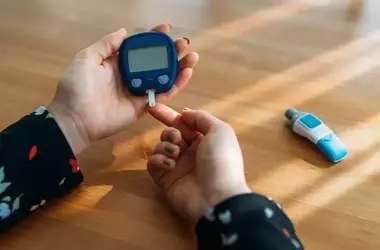
Effective metabolic management relies on the ability to quantify biological data accurately.Blood glucose monitors, also known as glucometers, are medical devices designed to measure the concentration of glucose within the blood. This technology provides individuals and healthcare professionals with immediate data regarding how the body processes sugar, which is a critical component of managing conditions such as diabetes. The following discussion explores the scientific principles behind these devices, progressing from basic components to the complex electrochemical reactions that enable measurement. It also presents an objective comparison of different technological modalities, explores clinical standards for accuracy, and concludes with a look at future developments in physiological monitoring. By moving from foundational chemistry to practical Q&A, this resource serves as an informative guide for understanding the role of glucose monitoring in modern health assessment.
 By Emily Watson
 Dec 26, 2025
How Blood Pressure Monitors Work: A Technical and Physiological Overview
Ablood pressure monitor, clinically known as asphygmomanometer, is a medical device designed to measure the force exerted by circulating blood against the internal walls of the arteries. This measurement is a critical indicator of cardiovascular hemodynamics and is expressed in two values: systolic and diastolic pressure. This article provides a neutral, evidence-based exploration of the mechanical and electronic principles behind these devices. It details the transition from manual auscultation to digital oscillometry, the physics of arterial occlusion, and the objective frameworks used to ensure measurement accuracy. The following sections follow a structured trajectory: defining the parameters of pressure measurement, explaining the core mechanisms of manual and digital systems, presenting an objective overview of device categories, and concluding with a technical inquiry section to address common questions regarding monitoring technology.
 By Dr. Jonathan Reed
 Dec 26, 2025
Medical Device Risk Classifications Explained: A Regulatory and Technical Overview
Medical device risk classificationis a formalized system used by health authorities to categorize medical instruments, apparatuses, and software based on the level of potential harm they pose to a patient or user if they fail or are misused. This classification determines the intensity of regulatory oversight, the depth of clinical evidence required, and the specific manufacturing standards a product must meet before entering the market. This article provides a neutral, evidence-based exploration of these systems, detailing the criteria for risk assessment, the specific categories utilized by major global regulators, and the objective frameworks used to ensure safety throughout a device's lifecycle. The following sections follow a structured trajectory: defining the parameters of medical risk, explaining the three-tier classification hierarchy, presenting a comparative view of international regulatory alignment, and concluding with a technical inquiry section to address common questions regarding device safety standards.
 By Dr. Aisha Rahman