

Thinking About AI School? Here’s What to Consider
There is a lot of talk these days about artificial intelligence. It shows up in conversations about work, education, and even everyday tools. For some people, that curiosity turns into a question: should I actually go study AI? Maybe it is a high school student trying to figure out the next step. Maybe it is someone already working in tech who wants to shift into machine learning. Or maybe it is someone with no technical background who wonders if there is a path in. This guide walks through what AI education can look like, who tends to go for it, the different formats available, and what a person might actually learn. It also covers how to think about choosing a program, what comes after completing one, and some practical approaches to learning and applying AI skills. The goal is to offer a practical, grounded look at what AI school involves, without assuming everyone already knows the jargon or has a computer science degree.
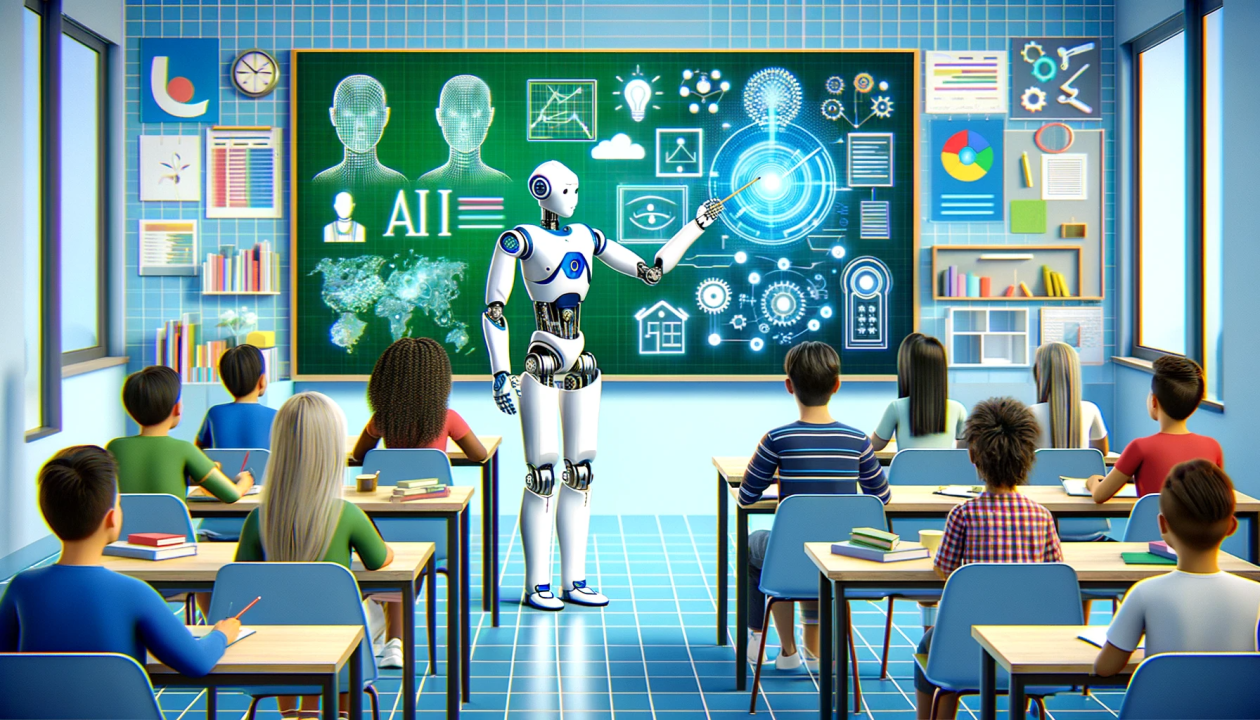
What Does “AI School” Even Mean?
AI school is not one single thing. It can mean a four-year university degree, a six-month intensive bootcamp, or a collection of online courses. What ties them together is a focus on artificial intelligence: machine learning, neural networks, natural language processing, computer vision, and the math and coding that make them work.
Some programs are housed within traditional universities. Others are run by independent schools that focus exclusively on tech and data science. There are also shorter, more focused options offered by platforms that partner with industry professionals. The level of depth varies, but most AI programs aim to teach both the theory and the practical skill of building or applying AI models.
Who Usually Considers AI Education
AI programs attract a mix of people, and there is no single profile.
- Recent high school graduates: Some go straight into a bachelor’s program in computer science with a concentration in AI. They are looking for a structured, multi-year foundation.
- Career switchers: People coming from fields like marketing, finance, healthcare, or even the humanities often look for intensive programs that help them gain technical skills in a relatively condensed time frame.
- Working professionals in tech: Software engineers, data analysts, or IT professionals may pursue specialized certificates or part-time programs to add AI expertise to their existing skill set.
- Entrepreneurs and business professionals: Some are not looking to become engineers but want to understand AI well enough to lead teams, evaluate projects, or make informed decisions in their organizations.
According to the 2024 AI Index Report from Stanford University, the number of people enrolling in AI-related courses and programs has grown steadily across both academic and professional education settings. That growth reflects interest from a wide range of backgrounds, not just computer science.
Different Formats of AI Programs
Not all AI education looks the same. The format can shape the experience significantly.
University Degree Programs (Bachelor’s or Master’s)
These are typically longer commitments—two to four years. They include foundational math (calculus, linear algebra, probability), programming (Python, data structures), and advanced AI courses. Many universities also require a capstone project or thesis. A degree is often expected for research-oriented roles or positions in large tech companies.
Bootcamps and Intensive Courses
Bootcamps usually run from three to nine months. They focus heavily on hands-on projects, often with a goal of preparing students for entry-level roles like machine learning engineer or data scientist. The pace is faster than a university program, and admission sometimes requires some prior coding experience.
Certificates and Specializations
These are often offered through universities, online learning platforms, or professional organizations. A certificate program might take three to six months and cover a specific area like natural language processing or computer vision. They can be useful for someone who already has a technical background and wants to deepen a particular skill.
Self-Paced Online Courses
Many platforms offer individual courses that let learners move at their own speed. These range from introductory to advanced. For someone just exploring whether AI is a good fit, a self-paced course can be a low-pressure way to start.
The choice between formats depends on factors like time availability, prior experience, and career goals. There is no single right path.
What a Typical AI Program Covers
While curricula vary, most AI programs share a common core. A typical program might include:
- Programming fundamentals: Python is the dominant language in AI. Courses cover data structures, algorithms, and libraries like NumPy, pandas, and scikit-learn.
- Mathematics for AI: Linear algebra (vectors, matrices), calculus (derivatives, gradients), probability, and statistics form the backbone of machine learning.
- Machine learning: Supervised learning, unsupervised learning, model evaluation, and common algorithms like decision trees, support vector machines, and clustering.
- Deep learning: Neural networks, backpropagation, frameworks like TensorFlow or PyTorch, and architectures such as convolutional neural networks (CNNs) and transformers.
- Specialized topics: Depending on the program, students may explore natural language processing, computer vision, reinforcement learning, or AI ethics.
- Hands-on projects: Most programs emphasize building real projects—whether it is a chatbot, a recommendation system, or an image classifier—to demonstrate understanding.
According to the U.S. Bureau of Labor Statistics, employment in computer and information technology occupations is projected to grow faster than the average for all occupations, with roles like data scientist and machine learning engineer showing particularly strong demand. Data on occupational projections can be found through workforce analytics sources such as Lightcast.
How to Think About Choosing a Program
Choosing where to study AI involves looking at more than just the name of the school. A few practical considerations:
- Curriculum depth: Does the program cover both theory and application? Some programs lean heavily toward coding without much math, which can limit understanding of how models work under the hood.
- Instructor background: Are instructors working in the field or have recent industry experience? Their experience can shape how current the material is.
- Project work: Look for programs that require portfolio projects. Employers often look at what someone has built, not just what courses they completed.
- Career support: Does the program offer resume review, interview preparation, or connections with employers? Some bootcamps and universities have strong career services.
- Cost and duration: Tuition varies widely. A four-year degree at a public university costs significantly different from a short-term bootcamp. Weighing cost against expected outcomes is part of the decision.
One way to start is to look at programs that publish placement data or alumni outcomes. Not all do, but those that do can provide a clearer picture.
What Comes After Completing an AI Program
Finishing a program opens up a range of possibilities, and where someone ends up often depends on their background, the type of program they completed, and what they built along the way.
Technical roles: Many graduates move into positions like machine learning engineer, data scientist, AI engineer, or computer vision engineer. These roles typically involve building, training, and deploying models. Some also go into research assistant positions, especially those with a bachelor’s or master’s degree.
Hybrid roles: Not everyone ends up writing code all day. Some move into roles like AI product manager, technical program manager, or solutions architect. These positions require enough technical understanding to communicate with engineers and enough business sense to align projects with goals.
Entrepreneurship: A number of people use their skills to build their own tools, applications, or consulting practices. AI is used across industries, so someone might start a company focused on healthcare, education, finance, or creative tools.
Applying AI in an existing field: For someone already working in marketing, logistics, healthcare, or another industry, adding AI skills can shift their career without leaving their field. They might become the person who leads AI projects within their organization or helps teams adopt new tools.
Further education: Some graduates choose to continue with a master’s degree or PhD, particularly if they are interested in research or roles that require advanced specialization.
Practical Approaches to Learning AI
Learning AI can feel like a lot at the beginning. A few approaches tend to make the process more manageable.
- Start with the math: Not everyone enjoys it, but understanding the math behind the models—especially linear algebra and probability—makes everything else easier. Even spending a few weeks reviewing basic concepts can pay off.
- Code early, code often: Reading about algorithms without implementing them leaves gaps. Writing code, even if it is just small experiments with simple datasets, builds understanding faster than watching lectures alone.
- Work on projects that matter to the learner: Staying motivated is easier when the project connects to something interesting. A music recommendation system, a tool to organize photos, or a model that analyzes sports statistics can be more engaging than generic assignments.
- Use existing tools and libraries: Beginners do not need to build every algorithm from scratch. Learning how to use libraries like scikit-learn, TensorFlow, and PyTorch allows for faster progress while still understanding the underlying concepts.
- Look at how others solve problems: Studying public notebooks on platforms like Kaggle or GitHub shows how experienced practitioners approach data cleaning, feature engineering, and model tuning.
Techniques for Applying AI Effectively
Once someone has learned the basics, applying AI in a way that actually works—whether in a job or on personal projects—involves more than just running code.
- Start with a clear problem: Before touching any model, it helps to know what the goal is. Is the aim to predict something, classify data, generate text, or automate a task? A clear problem makes it easier to choose the right approach.
- Understand the data first: Data quality often matters more than model complexity. Looking at missing values, outliers, and distribution patterns before building anything can save time later.
- Keep the first model simple: A baseline model—like linear regression or a simple decision tree—provides a reference point. Once that is working, more complex models can be added to see if they actually improve results.
- Evaluate with the right metrics: Accuracy is not always the best measure. For imbalanced datasets, precision, recall, or F1 score may tell a more useful story. Choosing metrics that align with the real-world goal makes a difference.
- Think about deployment early: A model that works on a laptop in a notebook may not work the same way in production. Considering how the model will be used—whether as an API, a batch process, or embedded in an application—shapes how it should be built.
- Stay aware of limitations: AI models reflect the data they are trained on. They can inherit biases, make confident mistakes, and fail in unexpected ways. Testing with different inputs and thinking about edge cases is part of responsible application.
A Few Things to Keep in Mind About AI Education
AI is a fast-moving field. What is taught today may shift in a few years. A good program does not just teach the latest tools—it builds a foundation that allows someone to learn new tools as they emerge.
Also, hands-on practice matters more than in some other fields. Reading about machine learning without writing code and working through data sets leaves gaps. Programs that emphasize projects tend to give a more accurate sense of what working in AI actually feels like.
Common Questions About AI School
Q: Do I need a computer science degree to study AI?
A: Not necessarily. Many AI programs—especially bootcamps and certificates—accept students from non-technical backgrounds. However, prior comfort with logic, math, or coding can make the learning curve gentler. Some programs offer prep courses to help bring students up to speed.
Q: How long does it take to get into an AI role after starting a program?
A: That varies widely. A university degree takes years. A bootcamp might take six months. After completing a program, the job search itself can take weeks or months. There is no set timeline.
Q: Are online AI programs considered as credible as in-person ones?
A: Credibility depends more on the program’s content, instructors, and outcomes than on format. Some online programs are run by well-known universities and have strong reputations. Others are less established. Checking whether a program has accreditation or industry recognition can be helpful.
Q: What if I try an AI course and realize it is not for me?
A: That is common. Some people start with a short, low-cost course to test the waters. If the interest holds, they move to a more intensive program. If not, they have learned something about their preferences without a large commitment.
Q: Is there a lot of math involved?
A: Yes, especially in programs that go deep into machine learning and model development. Understanding linear algebra, calculus, and probability is part of building and tuning models. Some programs emphasize applied coding with existing libraries, which can reduce the amount of math done from scratch, but the concepts still come up.
Q: What jobs can AI school lead to?
A: Common roles include machine learning engineer, data scientist, AI engineer, research assistant, or AI product manager. Some graduates start in related roles like software engineering or data analysis and move toward AI over time. Others use AI skills to advance within fields like healthcare, finance, or logistics.
References
Related Articles
Unlock Fluency from Your Living Room: Embrace 100% Online Language Courses
Jul 16, 2025 at 9:32 AM
Online English Courses: From Beginner to Fluent
Nov 6, 2025 at 3:35 AM
Mastering the Global Tongue: A Comprehensive Guide to Learning English Effectively
Dec 2, 2025 at 6:22 AM
A Comprehensive Overview of Online Language Courses
Sep 16, 2025 at 2:41 AM
A Comprehensive Overview of Online Language Course
Oct 17, 2025 at 8:36 AM
Japanese Language Courses: Structure, Learning Systems, and Educational Context
Mar 27, 2026 at 9:22 AM
Air Conditioning Repair Training: Technical Foundations, Mechanisms, and Practical Context
Mar 23, 2026 at 9:45 AM
Teamwork Training: Concepts, Strategies, and Evidence-Based Insights
Mar 30, 2026 at 9:20 AM
How to Become an Influencer: A Practical Guide to the Path of Creator Growth
Mar 23, 2026 at 3:49 AM
Japanese Language Courses: Foundations, Mechanisms, and Educational Context
Mar 23, 2026 at 9:51 AM
Violin Training: Fundamentals, Techniques, and Educational Approaches
Mar 30, 2026 at 9:34 AM
Sculpture Courses: A Scientific Overview of Artistic Education, Techniques, and Applications
Mar 24, 2026 at 9:41 AM
Customer Service Training: Principles, Mechanisms, and Practical Applications
Mar 20, 2026 at 8:42 AM
Engineering Design Training: A Scientific Overview of Principles, Methods, and Applications
Mar 24, 2026 at 9:08 AM
Horticulture Courses: Principles, Learning Mechanisms, and Educational Applications
Mar 27, 2026 at 9:33 AM
Pharmaceutical Education Courses: Structure, Scientific Foundations, and Learning Systems
Mar 27, 2026 at 9:25 AM
Navigating the World of Cosmetology School: A Practical Guide
Mar 24, 2026 at 6:31 AM
Electrical Appliance Repair Training: Concepts, Mechanisms, and Practical Context
Mar 20, 2026 at 8:38 AM
Painting Arts Training: Foundations, Mechanisms, and Creative Development
Mar 23, 2026 at 9:56 AM
Digital Marketing Course for Beginners: Audience Growth and Online Marketing Basics
Mar 25, 2026 at 5:37 AM


This website only serves as an information collection platform and does not provide related services. All content provided on the website comes from third-party public sources.Always seek the advice of a qualified professional in relation to any specific problem or issue. The information provided on this site is provided "as it is" without warranty of any kind, either express or implied, including but not limited to the implied warranties of merchantability, fitness for a particular purpose, or non-infringement. The owners and operators of this site are not liable for any damages whatsoever arising out of or in connection with the use of this site or the information contained herein.