Art Training
The Mechanics of Skill Acquisition: How to Structure Home Art Training Routines

The concept of a Home Art Training Routine refers to a systematic, self-regulated schedule designed to facilitate the acquisition of visual art competencies outside of a formal institutional environment. Structuring such a routine involves the application of instructional design principles, motor skill acquisition theories, and cognitive load management. Unlike unstructured "hobbyist" drawing, a structured routine prioritizes deliberate practice over mere repetition to ensure measurable progress in technical domains such as anatomy, perspective, and color theory.
This article provides an objective analysis of the methodologies used to organize art training at home. It will explore the fundamental concepts of "Deliberate Practice," analyze the core mechanisms of balanced curriculum design, and present an impartial discussion on the various logistical frameworks available to learners. The text concludes with a summary of long-term development trends and a clarifying question-and-answer section.
I. Foundational Concepts: Deliberate Practice and Skill Decay
To structure a routine, one must first understand the psychological framework of Deliberate Practice, a term popularized by psychologist K. Anders Ericsson.
1. The Threshold of Mastery
In a home environment, progress is governed by the quality of engagement rather than the quantity of time spent. Deliberate practice requires specific, well-defined goals, focused attention, and immediate feedback loops. Without a structured routine, learners often fall into "mindless repetition," which reinforces existing habits rather than correcting technical errors.
2. The Half-Life of Motor Skills
Visual art involves "fine motor skills" and "procedural memory." Research suggests that motor skills begin to degrade if not reinforced within a specific timeframe. A routine serves as a mechanism to combat Skill Decay by ensuring that core fundamentals (e.g., gesture drawing, value control) are revisited with sufficient frequency to move from "conscious effort" to "unconscious competence."
II. Core Mechanisms: The Anatomy of a Balanced Routine
A technically sound home training routine is composed of four distinct functional blocks. The ratio of these blocks varies depending on the learner's current proficiency level.
1. The Warm-Up (10-15%)
The objective of the warm-up is to calibrate the "eye-hand coordination" and loosen the muscles of the arm and wrist. Common technical exercises include:
- Line Quality Drills: Drawing parallel lines and ellipses to establish pen control.
- Gesture Drawing: Capturing the "essence" or "movement" of a figure in 30 to 60 seconds to improve observational speed.
2. Deliberate Study (40-50%)
This is the core of the routine, focusing on "Knowledge Acquisition." This block is usually dedicated to a single fundamental for a set period (e.g., "The Month of Perspective"). It involves studying anatomical diagrams, perspective grids, or light physics.
3. Application and Production (30-40%)
Knowledge remains theoretical until applied. This block involves taking the concepts learned in the "Study" phase and using them to create original compositions or complex studies. This facilitates the "transfer of learning" from abstract rules to practical utility.
4. Analysis and Feedback (5%)
Self-directed learners must utilize "Analytical Loops." This involves comparing one's work against reference photos or anatomical charts to identify objective discrepancies in proportion, value, or perspective
III. Presenting the Complete Landscape: Objective Discussion
The organization of home training can be categorized into three common logistical frameworks, each with specific technical trade-offs.
1. The Block Scheduling Model
This model involves focusing on one specific subject (e.g., human anatomy) exclusively for several weeks.
- Benefit: Facilitates "Deep Work" and rapid immersion.
- Trade-off: May lead to "Skill Imbalance," where other fundamentals (like color or environment design) begin to atrophy.
2. The Interleaved Practice Model
Interleaved practice involves rotating between different subjects within a single week (e.g., Monday: Perspective; Tuesday: Anatomy). According to a study published in NPJ Science of Learning, interleaved practice can enhance long-term retention compared to blocked practice ().
- Benefit: Strengthens the brain's ability to differentiate between different technical concepts.
- Trade-off: May feel slower in the short term due to higher "Cognitive Load."
3. The 50/50 Rule
This framework, often cited in online art communities, suggests a 50% split between "Study" (structured learning) and "Play" (unstructured creation). This balance is intended to prevent "Academic Burnout" while maintaining technical growth.
| Routine Component | Focus | Primary Goal |
| Studies | Observation/Accuracy | Mental Model Accuracy |
| Sketching | Speed/Idea Generation | Creative Fluency |
| Finished Pieces | Process Management | Integration of Fundamentals |
IV. Summary and Outlook: Technology and Autodidacticism
The landscape of home art training is undergoing a shift toward Data-Driven Self-Regulation.
- Digital Integration: Learners are increasingly utilizing 3D modeling software (like Blender or ZBrush) to create custom references for perspective and lighting, bridging the gap between digital and traditional fundamentals.
- Algorithmic Learning: AI-driven platforms are emerging that can analyze a learner’s digital brushstrokes to provide feedback on "Line Confidence" or "Value Distribution," potentially augmenting the traditional self-analysis phase.
- Global Access: Data from the United Nations Educational, Scientific and Cultural Organization (UNESCO) indicates a significant increase in the accessibility of open-source educational resources, allowing for high-level technical training regardless of geographic location (Source: UNESCO Open Educational Resources).
V. Question and Answer (Q&A)
Q: Is it more effective to practice for a single 8-hour session once a week or 1 hour daily?
A: From a "neurobiological" perspective, the Distributed Practice model (1 hour daily) is significantly more effective for skill retention. Sleep plays a critical role in "Memory Consolidation," meaning the brain requires sleep cycles between practice sessions to permanently encode motor patterns and theoretical concepts.
Q: How does a beginner know if their home routine is actually working?
A: Progress is measured through Comparative Audits. A learner should save work from "Month 1" and compare it to "Month 4" using objective criteria (e.g., "Are my ellipses more symmetrical?" or "Is my value range wider?"). Subjective "feeling" of improvement is often an unreliable metric.
Q: What is the role of "copying" in a home training routine?
A: "Master Studies"—the act of copying works by established artists—is a valid technical exercise for understanding "Workflow" and "Technique." However, it must be balanced with "Life Drawing" (drawing from 3D reality) to ensure the learner understands the "source" of the information rather than just the "style" of another artist.
Q: Should a beginner focus on digital or traditional tools in their routine?
A: The "Fundamentals" (perspective, light, form) are tool-agnostic. Traditional media (charcoal, pencil) provides higher "Tactile Feedback" and forces more careful planning, while digital media allows for faster "Iterative Loops" due to the undo function and layering systems. Most modern routines incorporate a hybrid approach.

Electronic music producer and DJ teaching beatmaking, mixing, and the history of hip-hop and house music.
Exploration ArchivesOther Articles
 Dec 30, 2025
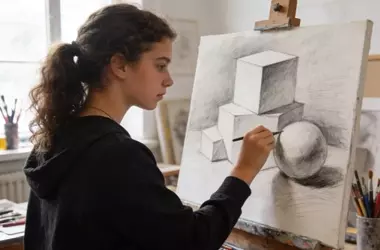
The Mechanics of Visual Literacy: An Art Training Fundamentals Guide for Beginners
Art Training Fundamentalsrefer to the core set of theoretical principles and practical skills that form the basis of visual representation. These include the mastery of form, value, color theory, and spatial perspective. Much like the laws of physics govern the natural world, these fundamentals dictate how light, shadow, and geometry interact to create a convincing two-dimensional or three-dimensional image.
 By Youssef Khoury
 Dec 26, 2025
How to Improve Knitting Skills for Beginners
Improving your knitting skills is a transition from simply "making stitches" to understanding thearchitecture of the fabric. For a beginner, the fastest way to progress is to move beyond the basic garter stitch and master the technical relationship between your needles, your yarn, and your tension.
 By Marcus Williams
 Dec 26, 2025
The Impressionist’s Start: A Technical Guide to Amateur Printmaking
Printmaking is the process of creating art by transferring ink from a prepared surface (the "matrix") onto paper or fabric. For an amateur, it is a rewarding bridge between drawing and mechanical production, allowing for the creation of multiple original editions.
By Youssef Khoury