Art Training
The Mechanics of Habituation: How to Build Consistency in Art Training

Art Training Skill Progression refers to the structured trajectory through which a learner acquires, integrates, and masters visual art competencies. For the hobbyist, this process is characterized by a transition from symbolic representation—drawing based on internalized icons—to perceptual representation, which relies on the physics of light, geometry, and spatial logic. Progression is non-linear and is governed by the accumulation of specific mental models and motor refinements.
This article provides an objective overview of the skill progression landscape. It will define the fundamental stages of artistic growth, analyze the core mechanisms of deliberate practice and cognitive feedback loops, and present a balanced discussion on various methodologies for self-directed improvement. The discussion concludes with a summary of the shifting technological environment in art education and a clarifying question-and-answer section.
I. Foundational Concepts: The Hierarchy of Artistic Competence
To analyze skill progression, one must categorize the layers of knowledge that constitute visual literacy. Progression generally follows a bottom-up hierarchy where foundational layers must reach a degree of stability before complex layers can be successfully integrated.
1. The Stages of Competence
Hobbyists typically move through the four stages of the Competence Model:
- Unconscious Incompetence: The learner is unaware of technical errors (e.g., incorrect perspective or anatomical distortion).
- Conscious Incompetence: The learner recognizes errors but lacks the motor skills or specific knowledge to correct them.
- Conscious Competence: The learner can produce accurate work but requires intense concentration and significant time.
- Unconscious Competence: Technical skills, such as line quality or basic shading, become automatic, allowing cognitive resources to shift toward composition.
2. The Core Fundamentals
Progression is measured by the incremental mastery of "The Fundamentals," which include:
- Form and Construction: The ability to deconstruct complex subjects into three-dimensional primitive solids (spheres, cubes, cylinders).
- Perspective: The mathematical placement of objects within a spatial grid to create the illusion of depth.
- Value and Light: The logic of how light interacts with surfaces to create volume and focal points through the use of a value scale.
II. Core Mechanisms: The Science of Systematic Improvement
The mechanism of progression in a hobbyist context relies on the principles of neuroplasticity and Deliberate Practice. Unlike casual repetition, deliberate practice is designed to push the learner slightly beyond their current comfort zone to trigger cognitive adaptation.
1. The 70-20-10 Learning Ratio
Originally developed for professional development, this ratio is often adapted for art training to ensure a balanced skill stack:
- 70% Experiential: Active drawing, trial-and-error, and applying concepts to original work.
- 20% Social: Peer review, studying masterworks, and receiving critique.
- 10% Formal: Structured tutorials, reading anatomical texts, or studying color theory.
2. Feedback Loops and Error Correction
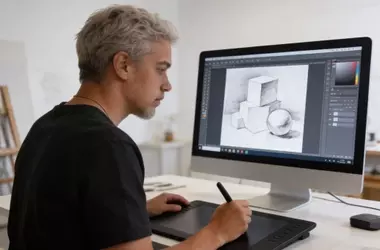
Progression is accelerated by the frequency of the "Feedback Loop." For hobbyists, this often involves Overlay Analysis, where a learner places their drawing over a reference photo or an anatomical chart to identify objective discrepancies in proportion. This mechanical comparison forces the brain to correct its internal "mental models."
3. Spaced Repetition and Skill Consolidation
Motor skills in art, such as "line confidence," are consolidated during rest periods. Spaced repetition—practicing a specific fundamental at increasing intervals—ensures that the skill is transferred from short-term working memory to long-term procedural memory.
III. Presenting the Complete Landscape: Objective Discussion
The paths to progression vary significantly depending on the learner's goals. There are two primary schools of thought in modern art pedagogy for non-professionals.
1. The "Constructionalist" vs. "Observationalist" Approaches
- Constructionalism: Focuses on understanding the internal structure (skeleton, perspective grids) to build objects from imagination. This is common in character design and concept art.
- Observationalism: Focuses on high-fidelity "Sight-Size" drawing, replicating exactly what the eye sees. This is the hallmark of traditional Atelier training.
2. Data on Skill Acquisition and Retention
According to research published by the National Endowment for the Arts (NEA), engagement in visual arts training is linked to improved visual-spatial reasoning and cognitive flexibility (). However, data suggests that a "Plateau Effect" is common around the 500-hour mark, where progress seems to stall as the learner attempts to integrate multiple complex concepts simultaneously.
| Development Phase | Focus Area | Primary Obstacle |
| Beginner | Line Control / Basic Shapes | Symbol-based drawing habits |
| Intermediate | Perspective / Value Logic | Cognitive overload during integration |
| Advanced Hobbyist | Anatomy / Composition | Stylistic stagnation or lack of critique |
IV. Summary and Outlook: The Future of Hobbyist Training
The trajectory of hobbyist art training is increasingly influenced by Hybrid Pedagogy and Digital Diagnostics.
- Virtual Reality (VR) Integration: New tools allow hobbyists to practice perspective and form in true three-dimensional space, removing the "2D-to-3D" translation barrier.
- Gamified Progression: Platforms are increasingly using "skill trees" to help hobbyists track their progress in specific fundamentals, providing a visual representation of their growth.
- Global Knowledge Exchange: The democratization of art education through open-source repositories has shifted the "gatekeeping" of technical knowledge from elite institutions to decentralized digital communities.
V. Question and Answer (Q&A)
Q: Is it necessary for a hobbyist to learn traditional media before digital tools?
A: There is no empirical evidence that one must precede the other. Traditional media (charcoal, pencil) provides high tactile feedback, which can assist in developing fine motor control. Digital media allows for faster iteration loops due to "undo" functions and layers, which can accelerate the understanding of composition. The underlying fundamentals (light, form) remain constant.
Q: How can a learner overcome a "progression plateau"?
A: A plateau often occurs when observational skills—the ability to see errors—outpace technical skills—the ability to fix them. Progression is typically resumed by narrowing the focus to a single, isolated fundamental (e.g., focusing solely on "edges" for a set period) rather than attempting to improve the entire work at once.
Q: How much time should a hobbyist dedicate to fundamentals versus personal projects?
A: A common objective framework is the 50/50 Rule. This suggests spending 50% of the time on structured, deliberate study and 50% on "play" or personal projects. This balance is intended to maintain motivation while ensuring that technical skill decay does not occur.
Q: Can art skills be acquired at any stage of life?
A: Yes. Neuroscientific studies on plasticity indicate that the brain can develop new neural pathways for motor control and visual processing throughout life. While younger learners may exhibit higher "fluid intelligence," others often possess higher "crystallized intelligence," allowing them to understand complex systems like perspective and color theory more efficiently.

Language acquisition researcher and polyglot focusing on effective techniques for learning East Asian languages.
Exploration ArchivesOther Articles
 Dec 30, 2025
Art Training for All Ages: A Comprehensive Beginner’s Guide
Art Trainingis the systematic process of acquiring visual literacy, motor control, and theoretical knowledge to represent or interpret the physical and conceptual world through various media. Regardless of the learner's age, this process involves the transition from symbolic representation to a technical understanding of how light, form, and perspective interact. This guide provides a neutral, information-based analysis of the core components required for foundational art education.
 By Talia Salt
 Dec 30, 2025
The Mechanics of Visual Development: Systematic Creative Art Training Practice Methods
Art Training Skill Progressionrefers to the structured trajectory through which a non-professional learner acquires, integrates, and masters visual art competencies. For the hobbyist, this process is characterized by a transition from symbolic representation—drawing based on internalized icons—to perceptual representation, which relies on the physics of light, geometry, and spatial logic. Progression is non-linear and is governed by the accumulation of specific mental models and motor refinements.
By Talia Salt Dec 30, 2025
The Mechanics of Development: Art Training Skill Progression Tips for Hobbyists
Art Training Skill Progressionrefers to the structured trajectory through which a non-professional learner acquires, integrates, and masters visual art competencies. For the hobbyist, this process is characterized by the transition from symbolic representation (drawing what one "thinks" an object looks like) to perceptual representation (drawing based on the physics of light, geometry, and anatomy). Progression is not linear but occurs through the accumulation of specific mental models and motor refinements.
 By Diego Silva