Art Training
The Mechanics of Artistic Growth: Progression Logic and Preventable Errors

Art Training Skill Progression describes the structured advancement from foundational visual literacy to advanced technical proficiency. For hobbyists and new learners, this journey involves the systematic calibration of hand-eye coordination and the acquisition of mental models such as perspective and light logic. This article aims to clarify the non-linear nature of skill development while identifying common "beginner traps" that frequently stall improvement. We will examine the core mechanisms of learning, explore the "mistake-correction" loop, and discuss the objective reality of the learning curve in art.
I. Foundational Concepts: The Hierarchy of Learning
To understand progression, one must categorize skills into a hierarchy. Most pedagogical frameworks, such as those discussed in the California Department of Education’s Career Technical Education (CTE) standards, emphasize that complex tasks rely on the stability of simpler ones ().
1. The Stages of Competence
Learners typically move through a four-stage psychological cycle:
- Unconscious Incompetence: Lack of awareness regarding technical errors (e.g., incorrect perspective).
- Conscious Incompetence: Awareness of errors but lacking the motor skills to correct them.
- Conscious Competence: The ability to achieve a skill correctly through intense focus.
- Unconscious Competence: Skill automaticity, where the hand performs complex marks without active thought.
2. The Fundamental Skill Stack
Progression requires mastery of the "Basics," which act as the foundation for all styles:
- Form: Deconstructing the world into 3D primitive solids (spheres, cubes, cylinders).
- Value: Managing the grayscale to communicate volume and depth.
- Perspective: The mathematical placement of objects in 3D space.
II. Core Mechanisms: Deliberate Practice and The Progression Loop
The mechanism of improvement is Deliberate Practice, a term popularized by cognitive psychologists to describe highly focused, goal-oriented repetition.
1. The Skill Consolidation Loop
Improvement occurs in a cycle: Attempt → Identify Error → Adjust Strategy → Re-Attempt. For hobbyists, the "Identify Error" phase is often the most difficult. Without an instructor, learners often use "Overlay Analysis"—placing their drawing over a reference to find discrepancies in proportion.
2. Spaced Repetition and Neuroplasticity
Motor skill acquisition (e.g., pen control) relies on neuroplasticity. Research indicates that frequent, shorter sessions (e.g., 30 minutes daily) are more effective for "procedural memory" than a single long session once a week. This is known as the Spacing Effect.
III. Common Mistakes to Avoid for Newbies
Identifying common errors is essential for maintaining momentum. The following represent the most prevalent "stagnation points" in self-directed training:
1. Skipping the "Construction" Phase
New learners often focus on details (eyes, skin texture) before establishing the underlying 3D structure. This results in "stiff" or "flat" drawings where individual parts are rendered well, but the overall form is anatomically impossible.
2. Over-reliance on "Symbolic Drawing"
The human brain is optimized to recognize symbols (e.g., two dots and a line for a face). Newbies often draw these internalized symbols rather than observing the actual abstract shapes and light patterns in front of them.
3. Mismanaging Contrast and Value
A frequent error is "The Gray Zone"—avoiding pure blacks and pure whites. This leads to muddy, flat images. New learners often rely on black paint for shadows, ignoring that shadows in the physical world often contain reflected light and color temperature shifts ().
4. Focusing on Quality Over Quantity
Known as "The Masterpiece Trap," many beginners spend weeks on one drawing. However, studies in skill acquisition suggest that the volume of work (making 100 quick sketches) often leads to faster improvement than focusing on a single "perfect" piece ().
| Mistake Type | Immediate Result | Long-Term Impact |
| Heavy Pressure | Hard to erase; hand fatigue | Carved paper; poor line quality |
| Ignoring Perspective | "Floating" or distorted objects | Inability to draw from imagination |
| Avoiding Feedback | Repetition of bad habits | Stalled progression (The Plateau) |
IV. Presenting the Complete Landscape: Objective Discussion
The reality of art training is that it is a long-term cognitive shift.
1. The Plateau Effect
Progress is not a straight line; it often resembles a series of stairs. A learner may feel they are not improving for weeks while their brain integrates new information. This is a normal part of the "Latent Learning" phase.
2. Tool vs. Technique
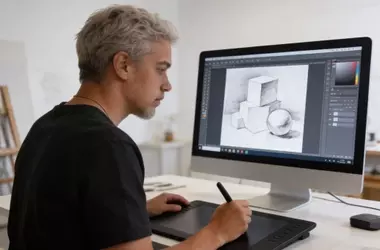
A common mistake is believing that high-end technology (e.g., expensive tablets or professional paints) will bypass the need for fundamental training. Objectively, tools only facilitate the expression of existing skills; they do not generate the skill themselves.
V. Summary and Outlook: The Future of Skill Tracking
The field of art education is moving toward Data-Driven Training. New learners are increasingly using digital software to track their "brush-mileage" and accuracy. The integration of 3D modeling allows beginners to understand "Form" more intuitively by manipulating virtual objects before drawing them.
Despite these advancements, the core requirement remains the same: a consistent, mindful practice of the fundamentals and a willingness to analyze mistakes objectively.
VI. Question and Answer (Q&A)
Q: How long does it take to see noticeable improvement?
A: According to the 7-hour per week model suggested by some art academies, a beginner can reach a basic level of technical competence within one year, provided the practice is deliberate and focused on fundamentals rather than mindless doodling (Source: Evolve Artist).
Q: Should I start with digital or traditional art?
A: There is no objective "best" medium. Traditional art (pencil, charcoal) provides high tactile feedback, which can help with motor control. Digital art allows for faster iteration and easier correction of errors. Most skills (perspective, value, anatomy) transfer seamlessly between both.
Q: How do I know if I’m "practicing wrong"?
A: If your work looks the same after 50 drawings, you are likely repeating symbols rather than observing. Objective comparison against reference material or professional work is the only way to gauge if your internal "mental models" are updating.

Street and architectural photographer guiding students in composition and capturing urban narratives.
Exploration ArchivesOther Articles
 Dec 30, 2025
The Mechanics of Self-Directed Visual Education: Art Training Without Formal Classes
Art Training Without Formal Classesis a self-regulated pedagogical approach where a learner acquires visual art competencies through independent study, decentralized resources, and deliberate practice rather than a curriculum-led institutional environment. This method relies on the "autodidactic" model of learning, necessitating high levels of metacognitive awareness—the ability to self-diagnose technical weaknesses and prescribe corrective exercises. In a landscape where information is increasingly digitized, the effectiveness of this approach is determined by the learner's ability to simulate the rigorous feedback loops typically provided by an instructor.
 By Natalia Petrova
 Dec 30, 2025
The Mechanics of Habituation: How to Build Consistency in Art Training
Art Training Skill Progressionrefers to the structured trajectory through which a learner acquires, integrates, and masters visual art competencies. For the hobbyist, this process is characterized by a transition from symbolic representation—drawing based on internalized icons—to perceptual representation, which relies on the physics of light, geometry, and spatial logic. Progression is non-linear and is governed by the accumulation of specific mental models and motor refinements.
 By Youssef Khoury
 Dec 30, 2025
Art Training for All Ages: A Comprehensive Beginner’s Guide
Art Trainingis the systematic process of acquiring visual literacy, motor control, and theoretical knowledge to represent or interpret the physical and conceptual world through various media. Regardless of the learner's age, this process involves the transition from symbolic representation to a technical understanding of how light, form, and perspective interact. This guide provides a neutral, information-based analysis of the core components required for foundational art education.
 By Talia Salt