Language Education
Japanese Language Education: Definition, Academic Foundations, and Global Educational Context

Japanese Language Education: Definition, Academic Foundations, and Global Educational Context
Clear Objective
Japanese language education refers to structured instructional systems designed to teach the Japanese language within formal or non-formal educational frameworks. This article provides a neutral and informational overview of Japanese language education as an academic and educational field. The discussion follows a defined sequence: clarification of the core concept, analysis of foundational linguistic and pedagogical principles, explanation of instructional mechanisms, objective discussion of scope and limitations, summary within a broader educational context, and a concluding question-and-answer section addressing common informational topics.
Basic Concept Analysis
Japanese is a language primarily spoken in Japan and is classified as a Japonic language. It is used in government, education, media, and daily communication. According to Ethnologue, Japanese has more than 120 million native speakers, making it one of the most widely spoken first languages globally.
Source: https://www.ethnologue.com/language/jpn/
Japanese language education refers to organized efforts to teach Japanese as a first language, second language, or foreign language. These efforts occur across multiple educational settings, including primary and secondary schools, higher education institutions, and continuing education programs. The term describes an educational field rather than a specific delivery method or qualification outcome.
The Japan Foundation identifies Japanese language education as an international academic discipline that includes curriculum design, teacher training, assessment standards, and cultural context integration.
Source: https://www.jpf.go.jp/e/project/japanese/
Core Mechanisms and In-Depth Explanation
Japanese language education is informed by linguistics, pedagogy, and second-language acquisition research. Instruction typically addresses multiple language components, including phonetics, grammar, vocabulary, pragmatics, and written expression.
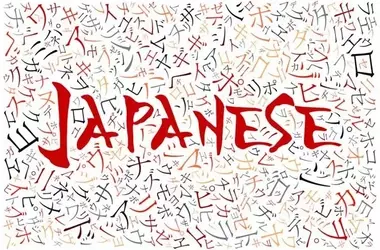
One defining feature of Japanese language education is instruction in its writing systems: hiragana, katakana, and kanji. Kanji characters are derived historically from Chinese script and require systematic teaching approaches focused on structure, usage, and contextual meaning. The Japanese Ministry of Education, Culture, Sports, Science and Technology (MEXT) provides standardized guidelines for language instruction and character usage within formal education.
Source: https://www.mext.go.jp/
Japanese grammar instruction commonly emphasizes sentence structure, particles, verb forms, and levels of formality, which are central to communicative appropriateness. Educational research highlights the importance of contextualized language use and sociolinguistic awareness in Japanese language instruction.
Source: https://www.cambridge.org/core/journals/applied-linguistics
Assessment frameworks also play a role in Japanese language education. Proficiency descriptors such as those used in the Japanese-Language Proficiency Test (JLPT) provide reference points for language ability, although they do not define instructional methods.
Source: https://www.jlpt.jp/e/

Comprehensive Perspective and Objective Discussion
From a global education perspective, Japanese language education exists within both domestic and international contexts. In Japan, it includes native language education within compulsory schooling. Internationally, it functions as a foreign language discipline taught in universities, language institutions, and cultural exchange programs.
UNESCO emphasizes multilingual education as a component of cultural exchange and global understanding, noting that language education supports communication across societies.
Source: https://www.unesco.org/en/education/languages
Japanese language education varies significantly in curriculum structure, instructional depth, and recognition depending on country, institution, and educational policy. Participation in Japanese language education does not inherently lead to formal certification, academic credit, or professional qualification. Such outcomes depend on external assessment systems and institutional accreditation.
Academic research also notes that language education faces challenges related to learner diversity, instructional standardization, and resource availability, particularly in international learning environments.
Source: https://www.britishcouncil.org/research-insight/online-language-learning
Summary and Outlook
In summary, Japanese language education refers to organized instructional practices focused on teaching the Japanese language within academic and educational systems. It is grounded in linguistic theory, pedagogical research, and cultural context, and it operates across diverse educational environments worldwide.
As international interest in Japanese language and culture continues, Japanese language education remains part of broader multilingual education frameworks supported by governments, academic institutions, and international organizations.
UNESCO – Language Education Overview:
https://www.unesco.org/en/education/languages
Questions and Answers
Q1: Is Japanese language education limited to learning Japanese as a foreign language?
No. It includes native language education in Japan as well as second or foreign language instruction internationally.
Q2: Does Japanese language education automatically result in language certification?
No. Certification depends on external assessment systems and issuing organizations.
Q3: Are instructional standards for Japanese language education the same worldwide?
No. Standards vary by country, institution, and educational framework.
Q4: Is Japanese language education connected to cultural education?
It often includes cultural and contextual elements, but the extent varies by curriculum design.

Diversity, Equity & Inclusion (DEI) expert designing and implementing transformative workplace training.
Exploration ArchivesOther Articles
 Dec 30, 2025
Japanese Classes Online: Definition, Linguistic Foundations, and Digital Education Context
Japanese classes online refer to structured educational offerings delivered through internet-based platforms that focus on teaching the Japanese language. This article provides a neutral and informational overview of Japanese classes online as an educational concept. The discussion follows a defined sequence: clarification of the core concept, explanation of foundational linguistic principles, examination of instructional mechanisms, objective discussion of scope and limitations, summary within a broader educational context, and a concluding question-and-answer section addressing common informational topics.
 By Dr. Angela Boyd
 Dec 30, 2025
Spanish Classes Online: Definition, Linguistic Basis, and Digital Learning Framework
Spanish classes online refer to structured Spanish language education delivered through internet-based platforms. This article provides a neutral and informational overview of Spanish classes online as an educational format. The discussion follows a clear sequence: defining the core concept, analyzing foundational linguistic principles, explaining instructional mechanisms, presenting an objective discussion of scope and limitations, summarizing the broader educational context, and concluding with a question-and-answer section addressing common informational topics.
 By Natalia Petrova
 Dec 30, 2025
Online Chinese Class: Definition, Linguistic Foundations, and Digital Education Context
An online Chinese class refers to a structured educational offering delivered through digital platforms that focuses on teaching the Chinese language. This article provides a neutral, informational overview of online Chinese classes as an educational concept. The discussion follows a defined sequence: clarification of the core concept, explanation of foundational linguistic principles, examination of instructional mechanisms, objective discussion of scope and limitations, a summary within a broader educational context, and a concluding question-and-answer section addressing common informational topics.
 By Youssef Khoury