Medical Devices
How Home Monitoring Devices Support Long-Term Health Awareness

Home monitoring devices encompass a specialized category of portable electronic instruments designed to measure and record physiological data outside of traditional clinical environments. These technologies—ranging from automated blood pressure cuffs to digital glucose meters and wearable pulse oximeters—serve as objective tools for tracking vital signs over extended periods. The core concept involves the systematic collection of personal health metrics to foster long-term health awareness and facilitate data-driven communication with healthcare providers. This article provides a neutral exploration of how these devices function, the biological parameters they quantify, the technical frameworks of data longitudinality, and the objective limitations of self-monitoring. The following sections follow a structured trajectory: defining the scope of home-based diagnostics, explaining the core mechanisms of data acquisition, presenting a comprehensive view of the benefits and constraints of long-term tracking, and concluding with a technical inquiry section to address common questions regarding device accuracy and data management.

1. Basic Conceptual Analysis: The Shift to Longitudinal Data
To analyze the role of home monitoring, one must first identify the difference between a "clinical snapshot" and "longitudinal data."
Clinical Snapshot vs. Trend Analysis
- Clinical Snapshot: A single measurement taken during a professional appointment. While highly accurate, it may be influenced by temporary factors such as stress or physical exertion.
- Longitudinal Data: Multiple data points collected over weeks, months, or years. This allows for the identification of patterns, such as the "dipping" or "non-dipping" of blood pressure during sleep.
The Scope of Home Monitoring
Home monitoring supports health awareness across several primary physiological domains:
- Cardiovascular: Heart rate and blood pressure ($BP$).
- Metabolic: Blood glucose ($BG$) and body mass index ($BMI$).
- Respiratory: Oxygen saturation ($SpO_2$) and peak expiratory flow ($PEF$).
- Circadian: Sleep architecture and physical activity levels.
2. Core Mechanisms: Data Acquisition and Processing
The technical efficacy of these devices is rooted in their ability to convert physical biological signals into quantifiable digital metrics through various sensing technologies.
Sensors and Transducers
At the heart of every home monitoring device is a sensor that detects a physical change:
- Pressure Transducers: In blood pressure monitors, these detect the oscillations of the arterial wall as a cuff deflates.
- Optical Sensors: In pulse oximeters and smartwatches, these use Photoplethysmography (PPG), emitting light into the skin and measuring the reflection or transmission to determine pulse and oxygen levels.
- Electrodes: In portable ECG devices, these detect the minute electrical impulses generated by the heart's sinoatrial node.
Data Storage and Synchronization
Modern devices utilize internal memory or cloud-based synchronization via Bluetooth or Wi-Fi. This transition from manual logging to automated digital storage reduces transcription errors and allows for the application of basic statistical analysis (such as calculating averages or standard deviations) directly within a software interface.
3. Presenting the Full Picture: Objective Clinical Discussion
Long-term health awareness through home monitoring is characterized by its ability to provide context to physiological fluctuations, though it must be evaluated within a framework of clinical rigor.
Benefits of Long-Term Monitoring
- Identification of Anomalies: Consistent tracking can highlight deviations from an individual's "normal" baseline, which may warrant further clinical investigation.
- Facilitation of Telemedicine: Objective data shared via secure portals provides clinicians with a more comprehensive view of a patient's status between visits.
- Stability Assessment: For individuals managing chronic conditions, devices like peak flow meters provide a daily metric of respiratory stability, assisting in the objective assessment of environmental triggers.
Objective Constraints and Variables
Despite the technical advancements, home monitoring is subject to several variables that can impact data integrity:
- Device Validation: Not all consumer-grade monitors meet the stringent standards of the International Organization for Standardization (ISO) or the Association for the Advancement of Medical Instrumentation (AAMI).
- User Technique: Accuracy is highly dependent on proper application, such as correct cuff placement or maintaining a seated position for five minutes prior to measurement.
- Data Overload: The continuous collection of data can lead to information fatigue or misinterpretation if not guided by a professional framework.
Comparative Overview of Monitoring Parameters
| Device | Primary Metric | Scientific Principle | Clinical Application |
| BP Monitor | $mmHg$ (Pressure) | Oscillometry | Hypertension tracking |
| Glucometer | $mg/dL$ or $mmol/L$ | Electrochemical Biosensing | Glycemic control |
| Pulse Oximeter | $SpO_2$ (%) | Spectrophotometry | Respiratory function |
| ECG Monitor | Heart Rhythm | Electrophysiology | Arrhythmia detection |
4. Summary and Future Outlook: AI and Integrated Systems
The future of home monitoring lies in the integration of Artificial Intelligence (AI) and the development of non-invasive, continuous sensing technologies.
Future Directions in Research:
- Continuous Monitoring: The development of sensors that do not require "spot checks," such as patches that monitor interstitial fluid or blood pressure via continuous wave analysis.
- Predictive Analytics: Utilizing machine learning to identify complex correlations, such as how sleep quality directly impacts blood pressure or glucose levels the following day.
- Interoperability: Establishing global standards for the Internet of Medical Things (IoMT) to ensure that data from different manufacturers can be unified into a single clinical record.
- Environmental Context: Integrating health data with external environmental data (e.g., air quality indices or pollen counts) to provide a holistic view of external influences on health.
5. Q&A: Clarifying Technical and Practical Inquiries
Q: How do I know if a home device is "Accurate"?
A: Clinical accuracy is often verified through independent validation. Organizations such as STRIDE BP or ValidateBP.org maintain lists of devices that have passed recognized clinical protocols. Looking for "validated" or "clinically cleared" labels is a standard approach in technical assessment.
Q: Why does my heart rate differ between a chest strap and a wrist-based sensor?
A: Chest straps measure electrical activity (ECG), which is the most direct signal. Wrist-based sensors use optical (PPG) technology, which measures blood flow. Optical sensors can be affected by skin tone, ambient light, and wrist movement, leading to slight variations during high-intensity activity.
Q: Can a home device replace a professional diagnosis?
A: No. Home monitoring devices are screening and management tools. A diagnosis requires a comprehensive clinical evaluation, including medical history, physical exams, and often laboratory or imaging tests that home devices cannot perform.
Q: What is "White Coat Hypertension," and how does home monitoring help?
A: This is a phenomenon where blood pressure is elevated only in a clinical setting due to anxiety. Home monitoring allows an individual to record their pressure in a familiar, relaxed environment, providing a more accurate representation of their "resting" blood pressure.
Q: How should digital health data be stored safely?
A: Technical best practices involve using platforms that comply with the Health Insurance Portability and Accountability Act (HIPAA) or equivalent regional data protection regulations. Utilizing two-factor authentication and ensuring that data is encrypted both "at rest" and "in transit" are core security requirements.
This article provides informational content regarding the technical mechanisms and clinical frameworks of home health monitoring. For individualized medical evaluation, diagnostic assessment, or the development of a health management plan, consultation with a licensed healthcare professional is essential.

Other Articles
 Dec 30, 2025
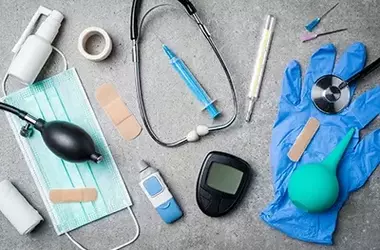
Understanding Home Medical Devices for Daily Health Monitoring
Home medical devicesare a category of non-invasive or minimally invasive instruments designed for use outside of professional clinical settings to measure, record, or monitor physiological parameters. These devices enable individuals to track vital signs—such as blood pressure, heart rate, blood glucose levels, and oxygen saturation—providing data that can assist in the long-term management of chronic conditions or general wellness tracking. This article provides a neutral, science-based exploration of common home monitoring technologies, detailing the physical and electronic mechanisms they utilize, the objective standards for their accuracy, and the regulatory frameworks governing their use. The following sections follow a structured trajectory: defining the parameters of home diagnostics, explaining the core mechanisms of oscillometry and biosensing, presenting a comprehensive view of data integration and clinical limitations, and concluding with a technical inquiry section to address common questions regarding calibration and maintenance.
 By Dr. Alejandro Ruiz
 Dec 26, 2025
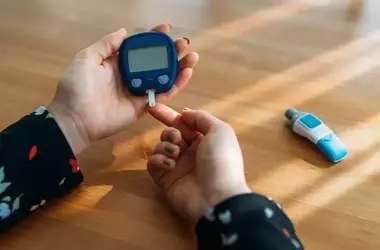
Understanding Blood Glucose Monitoring Technology: A Comprehensive Scientific Overview
Effective metabolic management relies on the ability to quantify biological data accurately.Blood glucose monitors, also known as glucometers, are medical devices designed to measure the concentration of glucose within the blood. This technology provides individuals and healthcare professionals with immediate data regarding how the body processes sugar, which is a critical component of managing conditions such as diabetes. The following discussion explores the scientific principles behind these devices, progressing from basic components to the complex electrochemical reactions that enable measurement. It also presents an objective comparison of different technological modalities, explores clinical standards for accuracy, and concludes with a look at future developments in physiological monitoring. By moving from foundational chemistry to practical Q&A, this resource serves as an informative guide for understanding the role of glucose monitoring in modern health assessment.
 By Emily Watson
 Dec 26, 2025
How Blood Pressure Monitors Work: A Technical and Physiological Overview
Ablood pressure monitor, clinically known as asphygmomanometer, is a medical device designed to measure the force exerted by circulating blood against the internal walls of the arteries. This measurement is a critical indicator of cardiovascular hemodynamics and is expressed in two values: systolic and diastolic pressure. This article provides a neutral, evidence-based exploration of the mechanical and electronic principles behind these devices. It details the transition from manual auscultation to digital oscillometry, the physics of arterial occlusion, and the objective frameworks used to ensure measurement accuracy. The following sections follow a structured trajectory: defining the parameters of pressure measurement, explaining the core mechanisms of manual and digital systems, presenting an objective overview of device categories, and concluding with a technical inquiry section to address common questions regarding monitoring technology.
 By Dr. Jonathan Reed