Medical Devices
How Diagnostic Devices Support Clinical Decision-Making

Diagnostic devices are specialized technological instruments, ranging from simple thermometers to complex magnetic resonance imaging (MRI) systems, designed to identify the nature and cause of a physiological condition. In the modern medical landscape, these tools serve as the objective foundation for clinical decision-making—the process by which healthcare professionals evaluate data to determine a management plan. By translating biological phenomena into quantifiable data, diagnostic devices move the clinical process from subjective observation to evidence-based analysis. This article provides a neutral, science-based exploration of diagnostic technology, detailing the categorization of in-vitro and in-vivo tools, the biochemical and physical mechanisms of signal acquisition, and the objective impact of high-fidelity data on professional judgment. The following sections follow a structured trajectory: defining the parameters of diagnostic sensing, explaining the core mechanisms of imaging and biosensing, presenting a comprehensive view of diagnostic accuracy and its limitations, and concluding with a technical inquiry section to address common questions regarding device reliability and data integration.

1. Basic Conceptual Analysis: The Hierarchy of Diagnostics
To analyze how diagnostic devices support decision-making, one must first identify the two primary categories of diagnostic intervention.
In-Vitro Diagnostics (IVD)
IVDs refer to tests performed on samples—such as blood, urine, or tissue—taken from the human body. These devices analyze chemical, hematological, or immunological markers.
- Point-of-Care Testing (POCT): Small, portable devices used at the bedside to provide immediate data (e.g., blood glucose meters).
- Laboratory Systems: High-throughput automated analyzers used for complex molecular or genetic screening.
In-Vivo Diagnostics (Imaging and Monitoring)
In-vivo diagnostics involve the direct assessment of the body’s internal structures or functions without necessarily removing samples.
- Radiology: Systems that use electromagnetic radiation or sound waves to visualize anatomy (e.g., X-ray, Ultrasound, CT).
- Electrophysiology: Devices that record the electrical activity of tissues (e.g., ECG for the heart, EEG for the brain).
Regulatory Context
According to the World Health Organization (WHO), diagnostic devices are essential for the implementation of successful clinical pathways. Data indicates that over 70% of clinical decisions are influenced by diagnostic test results, highlighting the critical nature of device accuracy and availability.
2. Core Mechanisms: Signal Transduction and Visualization
The efficacy of diagnostic devices is rooted in their ability to capture minute biological signals and convert them into a format that a clinician can interpret.
Magnetic Resonance Imaging (MRI): Nuclear Magnetism
MRI represents one of the most sophisticated in-vivo diagnostic tools.
- Mechanism: The device uses a powerful magnetic field to align the hydrogen protons in the body. Radiofrequency pulses then disrupt this alignment.
- Signal Capture: As the protons return to their original state, they emit signals that vary based on the type of tissue. The device’s computer translates these signals into highly detailed cross-sectional images of soft tissue.
Biosensors: Electrochemical Transduction
Many IVD devices, such as those used for metabolic monitoring, rely on biosensors.
- Biorecognition: The device uses a biological element (like an enzyme or antibody) that reacts specifically with a target molecule (like glucose or a specific protein).
- Transduction: This reaction creates a measurable change—usually an electrical current or a color change—which the device quantifies to provide a numerical concentration.
Ultrasound: Acoustic Reflection
Ultrasound devices utilize high-frequency sound waves to visualize internal organs in real-time.
- Pulse-Echo Principle: A transducer sends sound waves into the body. When these waves hit the boundaries between different tissues, they reflect back. The device calculates the distance and intensity of these echoes to construct a visual map of the anatomy.
3. Presenting the Full Picture: Data Integration and Objective Limitations
Diagnostic devices provide the "what" and the "where," but the clinical decision-making process must also account for the technical limitations of these tools.
The Role of Sensitivity and Specificity
In the evaluation of any diagnostic device, two statistical metrics are paramount:
- Sensitivity: The ability of the device to correctly identify those with the condition (True Positive rate).
- Specificity: The ability of the device to correctly identify those without the condition (True Negative rate).
Comparative Overview of Diagnostic Modalities
| Modality | Primary Mechanism | Clinical Support Function | Objective Limitation |
| X-Ray / CT | Ionizing Radiation | Visualizing bone and dense tissue | Exposure to radiation |
| Ultrasound | Acoustic Waves | Real-time soft tissue imaging | Limited penetration through bone/air |
| Blood Analysis | Electrochemical Sensing | Quantifying biochemical markers | Requires invasive sampling |
| ECG / EEG | Electrical Potential | Monitoring organ rhythm/activity | Sensitive to motion "noise" |
| MRI | Nuclear Magnetism | High-resolution soft tissue mapping | High cost; slow acquisition time |
Technical Variables and Accuracy
Data from the U.S. Food and Drug Administration (FDA) highlights that device performance is subject to "pre-analytical" and "analytical" variables. For example, the calibration of a glucose meter or the positioning of a patient in a CT scanner can influence the final data output, potentially impacting the subsequent clinical decision.
4. Summary and Future Outlook: Precision Diagnostics
The evolution of diagnostic devices is moving toward higher resolution, faster results, and non-invasive methods.
Future Directions in Research:
- Liquid Biopsy: Developing highly sensitive devices capable of detecting microscopic fragments of DNA or proteins in the blood to identify conditions at a molecular level before physical symptoms appear.
- AI-Integrated Imaging: Utilizing machine learning algorithms to assist clinicians in identifying subtle patterns in X-rays or MRIs that may be difficult for the human eye to detect.
- Wearable Continuous Diagnostics: Moving from "snapshot" diagnostics to continuous monitors that provide a 24/7 stream of data, allowing for the observation of transient physiological changes.
- Lab-on-a-Chip: Shrinking complex laboratory processes onto a single microchip, enabling sophisticated diagnostic testing in remote or resource-limited environments.
5. Q&A: Clarifying Technical and Clinical Inquiries
Q: Why do different diagnostic devices give different results for the same condition?
A: This is often due to the "limit of detection" (LoD) or the "analytical range." One device may be designed for rapid, low-resolution screening (high sensitivity), while another is designed for slow, high-resolution confirmation (high specificity). Each serves a different stage of the decision-making process.
Q: Can a diagnostic device be 100% accurate?
A: In a technical sense, no device is perfect. Every measurement has an inherent "margin of error" or "uncertainty." This is why clinicians often look at "trends" in data or combine results from multiple different types of devices to build a comprehensive clinical picture.
Q: How does a CT scan differ from a standard X-ray?
A: A standard X-ray provides a 2D image by sending radiation through the body from one angle. A CT (Computed Tomography) scan rotates the radiation source around the body, taking multiple images from different angles. A computer then compiles these into a 3D model, providing much greater detail of internal organs.
Q: Why is "Calibration" necessary for diagnostic equipment?
A: Over time, electronic sensors can experience "drift" due to temperature changes, component aging, or environmental exposure. Calibration involves comparing the device’s output against a known standard (a "reference material") to ensure that the data it produces remains within the specified accuracy range.
Q: What is "Point-of-Care" (POC) testing?
A: POC testing refers to diagnostic tests performed at or near the site of patient care (like a clinic or home) rather than in a centralized laboratory. The primary advantage is the speed of data acquisition, which allows for immediate clinical decisions, though these devices may have a slightly lower analytical range than large laboratory systems.
This article serves as an informational resource regarding the technical mechanisms and clinical application of diagnostic devices. For individualized medical evaluation, diagnostic assessment, or the development of a health management plan, consultation with a licensed healthcare professional is essential.

Other Articles
 Dec 30, 2025
Understanding Medical Monitoring Devices and Their Limitations
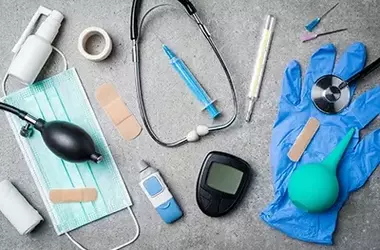
Medical monitoring devicesare specialized instruments designed to measure, record, and display physiological parameters of the human body in real-time or over extended periods. These devices—ranging from clinical-grade bedside monitors to portable consumer wearables—serve as essential tools for capturing vital signs such as heart rate, blood pressure, oxygen saturation, and electrical cardiac activity. The objective of this article is to provide a neutral, evidence-based exploration of monitoring technology. It will define the foundational categories of these instruments, explain the biochemical and physical mechanisms of signal acquisition, and present a balanced discussion on their technical constraints and the variables that influence data accuracy. The following sections follow a structured trajectory: defining the parameters of medical sensing, detailing the core mechanisms of transductive technology, assessing the objective limitations of data interpretation, and concluding with a technical inquiry section to address common questions regarding device calibration and reliability.
 By Dr. Alejandro Ruiz
 Dec 30, 2025
When Supportive Devices Are Used Alongside Medical Treatment
The integration ofsupportive devicesalongside primary medical treatment refers to a multidisciplinary approach where physical hardware or electronic instruments are used in conjunction with pharmaceutical or surgical interventions to optimize patient outcomes. These devices—ranging from mobility and respiratory supports to advanced monitoring systems—are not intended to replace primary therapy but to act as structural or functional adjuncts that facilitate recovery, stabilize physiological parameters, or improve daily function. This article provides a neutral, science-based exploration of the synergy between clinical treatment and supportive technology. It details the mechanical and biological principles of integrated care, examines how data from monitoring devices informs treatment adjustments, and discusses the objective criteria for device implementation. The following sections follow a structured trajectory: defining the parameters of adjunctive device use, explaining the core mechanisms of mechanical and physiological support, presenting a comprehensive view of the clinical landscape, and concluding with a technical inquiry section to address common questions regarding device maintenance and data integration.
 By Dr. Ibrahim Khalil
 Dec 30, 2025
An Overview of Supportive Medical Devices in Daily Care
Supportive medical devicesrefer to a broad category of health-related instruments, apparatuses, or software designed to assist individuals in managing physical impairments, monitoring physiological functions, or maintaining daily functional independence. Unlike acute intervention tools, supportive devices are primarily utilized in domestic or long-term care settings to bridge the gap between clinical requirements and everyday living. This article provides a neutral, science-based exploration of these technologies, detailing the mechanical and electronic principles of mobility, respiratory support systems, and monitoring hardware. The following sections follow a structured trajectory: defining the technical scope of supportive care, explaining the core mechanisms of mechanical and sensory assistance, presenting a comprehensive view of regulatory safety and efficacy, and concluding with a technical inquiry section to address common questions regarding device selection and maintenance.
 By Dr. Mei Wong