

U.S. Visa Application in Malaysia: A Practical Guide
Ever dreamed of strolling through Times Square, studying at a prestigious American university, or taking on a short-term work assignment in the United States? For Malaysians, making that dream a reality starts with one crucial step: getting a U.S. visa. The process might seem daunting at first—between form DS-160, visa interviews, and different fee structures—but it's actually a straightforward procedure once you understand the steps. This guide is here to walk you through everything you need to know about applying for a U.S. visa from Malaysia. It will explain the different types of visas available, the step-by-step application process, required documents, costs involved, and what to expect during your interview at the U.S. Embassy in Kuala Lumpur. At the same time, it will also introduce some optional agency service providers and provide practical advice on how to increase the success rate of your application. Think of it as a friendly conversation about navigating the U.S. visa process with confidence.
Do Malaysians Need a Visa to Travel to the USA?
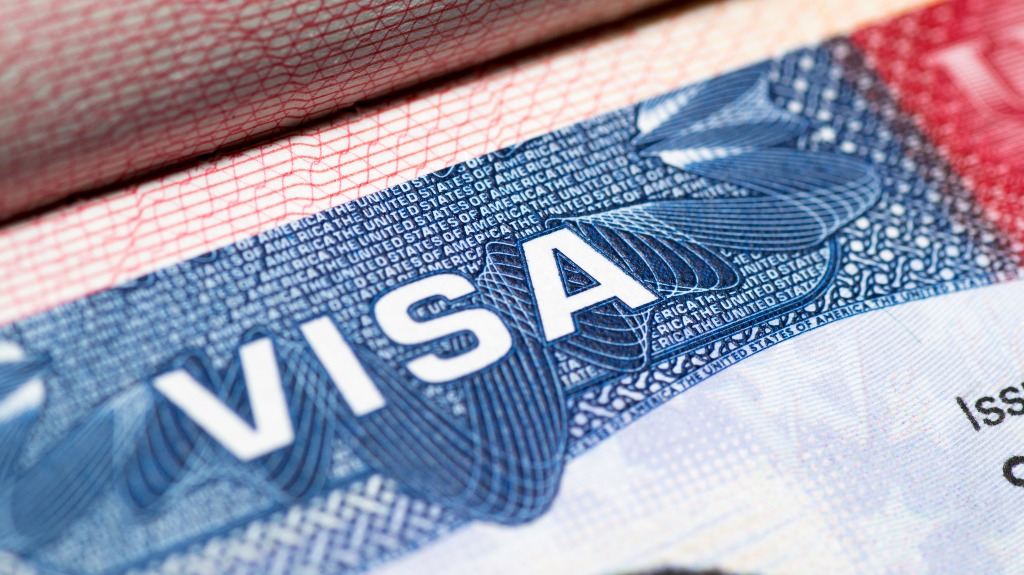
The short answer is yes. Unlike citizens of the 40 countries in the Visa Waiver Program, Malaysians require a visa to enter the United States for any purpose. The type of visa you need depends entirely on why you're going—whether it's for a holiday, business meeting, university studies, or temporary work.
The good news is that once approved, many U.S. visas offer excellent value. A tourist visa (B-2), for example, is typically valid for multiple entries over 10 years, allowing stays of up to 180 days per visit. That means one successful application covers your trips for an entire decade.
What Are the Main Types of U.S. Visas?
U.S. visas fall into two broad categories: nonimmigrant visas for temporary stays and immigrant visas for those planning to live permanently in the United States. For most Malaysian applicants, nonimmigrant visas are the relevant category.
Nonimmigrant Visas (Temporary Stays)
These visas are for people visiting the U.S. temporarily for specific purposes. The most common types for Malaysians include:
| Visa Type | Purpose | Key Requirements | Fee (USD) |
|---|---|---|---|
| B-1/B-2 | Business, tourism, medical treatment | Proof of funds, intent to return home | $185 |
| F-1 / M-1 | Academic or vocational study | Form I-20 from U.S. school | $185 |
| H, L, O, P, Q | Temporary employment | Approved Form I-129 petition from employer | $205 |
| J-1 | Exchange visitor programs | DS-2019 form from program sponsor | $185 |
| K-1 | Fiancé(e) of U.S. citizen | Approved I-129F petition | $265 |
Immigrant Visas (Permanent Residence)
These visas are for people moving to the U.S. permanently. When a person with an immigrant visa enters the U.S., they become a lawful permanent resident (green card holder). Common categories include family-sponsored visas (IR1, F1-F4) and employment-based visas (EB1-EB5).
How to Apply for a U.S. Visa from Malaysia: Step by Step
The application process follows a consistent pattern regardless of which nonimmigrant visa you're seeking. Here's how it works:
Step 1: Complete Form DS-160 Online
Form DS-160 is the Online Nonimmigrant Visa Application—the electronic form used by everyone applying for a temporary U.S. visa. This is your formal application, and it must be completed online through the Consular Electronic Application Center (CEAC) website.
Important tips for DS-160:
- Save your Application ID immediately—you'll need it to retrieve your form
- Click "Save" frequently to avoid session timeouts
- Answer all questions truthfully; electronic signature certifies accuracy under penalty of perjury
- Once submitted, DS-160 cannot be edited online. If corrections are needed, you typically must submit a new form and bring both confirmation pages to your interview
- Print the confirmation page with barcode—you must bring this to your interview
The DS-160 collects personal information, passport details, travel plans, U.S. contact information, employment and education history, and security questions. Starting in 2026, the form has added a "Future Career Plans and Relevance to U.S. Study" field, which requires a specific and clear explanation.
Step 2: Pay the Visa Application Fee
After submitting DS-160, you'll need to pay the Machine Readable Visa (MRV) fee before scheduling your interview. This fee covers processing costs and is nonrefundable, regardless of whether your visa is approved or denied.
Current MRV fees (as of 2026):
- B-1/B-2, F, M, J visas: $185
- H, L, O, P, Q visas: $205
- K visas: $265
- E visas: $315
Payment methods in Malaysia:
Payment options vary by country. For Malaysia, you can typically:
- Pay online through your visa appointment profile on USTravelDocs
- Make a bank deposit at a designated bank branch
- Pay at authorized payment centers
After payment, you'll receive a receipt with a unique number. Save this receipt—you'll need it to schedule your interview, and your MRV fee receipt is valid for one year from payment date.
Step 3: Schedule Your Interview
Once payment is confirmed, you can schedule your visa interview through the USTravelDocs website—the secure third-party platform that facilitates U.S. visa applications in Malaysia. Interviews take place at the U.S. Embassy in Kuala Lumpur.
Address: 376, Jln Tun Razak, Taman U Thant, 50400 Kuala Lumpur
Interview wait times vary by season and visa category, so it's wise to book as early as possible. For routine expedited appointments, applicants must meet the condition of not having received a visa 45 days before the start of their program, and the approval process takes about 7-10 days.
Step 4: Gather Required Documents
For your interview, bring these essential documents:
Mandatory documents:
- Passport valid for at least 6 months beyond your intended stay in the U.S.
- Printed DS-160 confirmation page
- Visa application fee payment receipt
- One 2x2 inch (51mm x 51mm) photo taken within last 6 months, white background, no glasses
Supporting documents (recommended):
While not strictly required, these documents help prove your purpose of travel, intent to return to Malaysia, and ability to fund your trip:
- Employment/Study Certificate: For employed individuals, use company letterhead, stating position, monthly salary, and approved leave period, with company seal. Students need a school enrollment certificate and their parents' employment certificates plus financial support letters.
- Bank statements (last 6-12 months): Reflect stable income records. The balance is recommended to be 1.5-2 times the total cost of the trip to the U.S.
- Asset certificates: Property deeds, vehicle registration certificates, etc. (if available)
- Itinerary: Detailed travel itinerary and hotel booking confirmations
- Invitation letters (if visiting friends/family)
- For students: Form I-20, school acceptance letter
- Past travel records: Copies of visa pages from old passports
Step 5: Attend Your Interview
On interview day, arrive at the U.S. Embassy with all documents. Security screening is strict—no food, drinks, luggage, cellphones, or electronic devices are permitted inside. Mobile phones will be held at the gate while you're on embassy grounds. Bring two forms of identification to facilitate entry.
The consular officer will ask questions about your travel plans, background, and ties to Malaysia. They'll also collect digital fingerprint scans. Be honest, concise, and confident. When answering questions, avoid vague statements and try to explain based on your specific situation.
Step 6: Visa Approval and Passport Collection
If approved, the officer will keep your passport to prepare the visa. You'll receive instructions on when and how your passport will be returned—either for pickup or courier delivery. Processing typically takes a few business days.
If your application is denied, the officer will explain why you're ineligible. Some denials can be overcome with additional documentation or by applying for a waiver.
Examples of Visa Service Agencies in Malaysia
For applicants seeking professional assistance, several agencies in Malaysia offer U.S. visa application consulting services. The following are examples for your independent research reference:
- VFS Global Malaysia: As a leading global visa outsourcing service provider, VFS Global provides administrative support services for the embassies and consulates of many countries. They have a visa application center in Kuala Lumpur and can offer guidance and support for the visa application process.
- CIMB Visa Services: Some banks like CIMB provide visa assistance services for specific customer groups, including guidance on form completion and preliminary document review.
- Specialized Immigration Law Firms: Several specialized immigration law firms operate in Kuala Lumpur, such as the immigration law teams at Zaid Ibrahim & Co. and Lee Hishammuddin Allen & Brown, which can provide professional legal consultation for applicants with complex situations.
- Education Agencies: For F-1 student visa applicants, several education agencies in Malaysia, such as AUG Student Services and IDP Education Malaysia, offer comprehensive study abroad services including visa guidance.
- Travel Agency Visa Services: Many travel agencies, such as Apple Vacations and member agencies of MATTA Travel, offer visa processing services for clients who book travel packages through them.
Please note: Agencies only provide consultation and administrative assistance. The final decision on visa issuance rests entirely with the U.S. Embassy or Consulate. When choosing a service provider, it is advisable to verify their qualifications and reputation.
How to Increase Your Visa Application Success Rate
The core of increasing the success rate of a U.S. visa application lies in understanding and effectively addressing the "presumption of immigrant intent" under Section 214(b) of the U.S. Immigration and Nationality Act. Applicants need to use documentation to prove they have strong ties to their home country, ensuring they will return on time after their trip. The following are some proven, practical suggestions.
1. Build a Complete "Proof of Ties to Home Country" System
The core logic of the U.S. visa review is a "presumption of guilt"—the visa officer presumes the applicant has immigrant intent unless the applicant uses documentation to disprove this presumption. Therefore, the core of application preparation is not "the more, the better," but "precise and effective."
Three Core Supporting Document Categories:
- Proof of Employment Authenticity (Most Critical): The visa officer needs to confirm that your occupation is genuine. It is recommended to prepare: employment certificate (company letterhead + company seal), bank statements from the last 6-12 months (reflecting stable income records), social security/provident fund contribution records. Freelancers can prepare business contracts, portfolios, platform earnings screenshots, etc.
- Proof of Income Stability: The visa officer needs to confirm you have sufficient funds to cover your U.S. trip and will not overstay due to financial pressure. It is recommended to prepare: bank statements from the last 6-12 months (balance covering travel expenses), tax payment certificates, investment income proof, etc. Avoid sudden large transfers, as they might raise suspicion of "borrowing money to show funds."
- Proof of Ties to Home Country (Crucial Safeguard): This is the most easily overlooked but vitally important part. It is recommended to prepare: property ownership certificates, vehicle ownership certificates, marriage certificates, children's birth certificates, household registration booklets, etc. These documents can prove you have unbreakable ties in your home country.
2. Prepare Clear and Specific Interview Answers
Answers during the interview need to be specific, truthful, and logically consistent. The following are key points for answering common questions, summarized from recently approved cases:
| Common Question | Recommended Answer Approach | What to Avoid |
|---|---|---|
| "Why did you choose this school/this itinerary?" | Mention the alignment of specific courses with your personal background, or the connection between the professor's research direction and your own project. | Vague answers like "The school is very good" or "I like American culture." |
| "What are your plans after graduation/after the trip?" | Explain your return plans concretely, linking them to domestic job opportunities, family responsibilities, etc. | Hesitating or answering "Not sure." |
| "Who is funding your trip?" | Clearly state the relationship between the sponsor and yourself, and the source of funds. | Vague or unclear source of funds. |
| "Do you own property/have a job in your home country?" | Have the relevant supporting documents ready and be able to present them at any time. | Making unsubstantiated claims, just saying "yes" without providing proof. |
3. Ensure Document Consistency and Completeness
Starting in 2026, the U.S. Citizenship and Immigration Services has fully implemented a "Document Cross-Verification" mechanism, which will compare key information in the DS-160 form, supporting documents, and interview answers one by one.
- Check details such as dates, job titles, salary amounts, business descriptions to ensure all materials are logically consistent
- The information in the DS-160 form must completely match the supporting documents
- If you have an old passport, be sure to bring it; past travel records can help support the credibility of your travel intentions
4. Special Considerations for 2026
- Social Media Account Declaration: New regulations in 2026 require submitting social media account records from the past 5 years. It is advisable to check account content in advance to ensure no inappropriate remarks exist.
- New Financial Proof Requirements: Funds must cover the entire study period plus 6 months of living expenses, requiring bank statements from the last 12 months and an explanation of income sources.
- Document Authenticity: All documents must be authentic and verifiable. Any forgery will result in a permanent ban from entering the United States.
Medical Examination for Immigrant Visas
If you're applying for an immigrant visa, you must complete a medical examination with an embassy-approved physician before your interview.
Approved physicians in Kuala Lumpur:
Dr. Gayatri Shukla and Dr. Low Ching Mun
Klinik Catterall, Khoo & Raja Malek
3rd Floor, Qualitas Health
No 39, Jalan Ampang, 50450 Kuala Lumpur
Tel: 60-3-20783200
Email: ckbm.us@qualitas.com.my
Bring your interview appointment letter, passport, four passport-sized photos, and immunization records to the medical exam. The doctor will seal the results—DO NOT open the envelope; bring it sealed to your interview.
Special Considerations for 2026
In January 2026, the U.S. Department of State introduced new restrictions on third-country visa applications. For Malaysian citizens, these changes generally don't affect applications made from Malaysia. However, if you're a foreign national living in Malaysia and planning to apply here, note that nonimmigrant visa applications in third countries now require either:
- Legal residence in Malaysia for at least 6 months, or
- An emergency situation documented with proof
Short-term visitors to Malaysia cannot apply for U.S. visas here—you must apply from your home country.
Frequently Asked Questions
Q: How long does the entire visa process take?
A: From completing DS-160 to receiving your visa, the process typically takes 2-4 weeks, but can vary based on interview appointment availability and administrative processing.
Q: Is the visa fee refundable if I'm denied?
A: No. The MRV fee is nonrefundable and nontransferable, regardless of whether your visa is approved or denied.
Q: Can I check my visa application status?
A: Yes. You can check status online through the Consular Electronic Application Center (CEAC) using your case number.
Q: What if I need to reschedule my interview?
A: Email the embassy at kliv@state.gov as soon as possible. However, there may be a significant wait for the next available appointment, and for certain visa categories, a visa may no longer be available by your rescheduled date.
Q: Do children need visas?
A: Yes. Every person traveling to the U.S. needs their own visa, regardless of age. Each applicant must complete their own DS-160 form.
Q: What happens if my visa application is put on hold (administrative processing)?
A: Administrative processing takes additional time after the interview. Most cases are resolved within 60 days. Wait at least 60 days before inquiring about status.
Q: Can I extend my stay in the U.S.?
A: Yes, you can file Form I-539 to extend your stay, ideally at least 45 days before your visa expires. Overstaying without authorization can lead to detention and deportation.
Q: Can using an agency guarantee visa approval?
A: No. No agency can guarantee visa approval. Agencies only provide consultation and document assistance services. The final decision on visa issuance rests entirely with the U.S. Embassy or Consulate. When choosing a service provider, it is advisable to verify their qualifications and reputation to avoid being misled by false promises.
Summary
Applying for a U.S. visa involves a clear sequence of steps: complete DS-160, pay the fee, schedule your interview, prepare documents proving your "ties to home country," and attend your appointment at the U.S. Embassy in Kuala Lumpur. The key to increasing the success rate is to center your preparation around "rebutting the presumption of immigrant intent" with truthful, specific, and logically consistent materials and answers. While the process requires attention to detail, thousands of Malaysians successfully obtain U.S. visas each year. The key is starting early, preparing thoroughly, and being honest throughout your application. For applicants needing additional guidance, choosing a reputable service agency can provide assistance. With your approved visa in hand, the opportunities for travel, study, and work in the United States are ready to explore.
Sources
- https://usahello.org/tl/immigration/visas-and-residency/us-visa/
- https://wise.com/my/blog/us-visa-for-malaysian
- https://adoption.state.gov/content/travel/en/us-visas/Supplements/Supplements_by_Post/KLL-Kuala-Lumpur.html
- https://manifestlaw.com/blog/mrv-fee-or-visa-application-fee/
- https://www.usimmigrationadvisor.com/ds-160-guide.html
- https://www.yfgj68.com/cat22c13/id0c2839a9b7
- https://visajx.com/m/a/10678.html
- https://www.yiqiliuxue.com/article/2127525.html
- https://m.sohu.com/a/990520286_120384059/
- https://www.sohu.com/a/977646764_120384059/
- https://zhuanlan.zhihu.com/p/2013937223091905806
- https://qiantum.xdf.cn/news/chongqing_7797289.shtml
- https://news.kaosheng.com/show-1757.html
Related Articles
AI Campaign Optimization Guide: Strategies to Improve ROI Without Raising Spend
Apr 24, 2026 at 7:55 AM
Discover Information Powerful AI Video Generators That Businesses Use for Scalable Content Creation
Apr 23, 2026 at 9:54 AM
AI Applications in the U.S.: A Realistic Guide for Everyday Life
Mar 9, 2026 at 5:40 AM
Understanding Medical Card Options for Seniors in Malaysia: 2026 Comprehensive Guide
Apr 27, 2026 at 2:59 AM
Personal Injury Lawyer Guide: Understand Your Rights and Compensation Options After an Accident
Apr 15, 2026 at 6:26 AM
Injured in a Car Accident? Discover How Personal Injury Lawyer Can Support Your Compensation Process
Apr 1, 2026 at 6:27 AM
Discover Email Marketing Automation Solutions for Scaling and Structured Growth-Oriented Campaign
Apr 15, 2026 at 7:37 AM
A Practical Guide to IMG Travel Insurance: Plans, Coverage, and Costs Explained
Apr 20, 2026 at 6:38 AM
A Guide to Roof Replacement: Your Home's Protective Layer
Jan 19, 2026 at 9:06 AM
AI Tools To Supercharge Your CRM, Sales And Prospecting
Apr 20, 2026 at 8:31 AM
Phones on installment in Kenya: monthly costs and options explained
Apr 27, 2026 at 9:08 AM
Learn How an Accident Lawyer Helps Protect Your Rights and Navigate Compensation Options
Apr 13, 2026 at 6:55 AM
Strategic Asset Management Services: Enhancing Organizational Efficiency and Control
Jun 30, 2025 at 9:09 AM
Exploring Compensation Options? See How an Bodily Injury Lawyer Can Help
Apr 13, 2026 at 7:09 AM
Bathroom Remodel Cost Breakdown in 2026 – Avoid Overpaying for Your Renovation
Apr 20, 2026 at 7:46 AM
Plastic Surgery Mexico Prices Explained: Cost Breakdown and Safe Options in 2026
Apr 21, 2026 at 7:48 AM
Can You Really Get a Free Phone in the U.S.? Here’s What People Are Actually Doing
Apr 14, 2026 at 10:36 AM
Explore Enterprise CRM Marketing Automation Solutions for Smarter ROI and Revenue Strategies
Apr 10, 2026 at 9:20 AM
Organize, Automate, Grow: Explore The Power of CRM Marketing Automation
Apr 10, 2026 at 8:20 AM
Celulares en cuotas en México: guía para encontrar planes de pago accesibles
Apr 14, 2026 at 10:22 AM


This website only serves as an information collection platform and does not provide related services. All content provided on the website comes from third-party public sources.Always seek the advice of a qualified professional in relation to any specific problem or issue. The information provided on this site is provided "as it is" without warranty of any kind, either express or implied, including but not limited to the implied warranties of merchantability, fitness for a particular purpose, or non-infringement. The owners and operators of this site are not liable for any damages whatsoever arising out of or in connection with the use of this site or the information contained herein.